Yes, German Shepherds can live in hot climates.
But living safely in a hot climate is very different from simply tolerating a hot afternoon.
If you are asking how hot is too hot for dogs, especially a large, active, double-coated breed such as the German Shepherd, the most useful answer is not one temperature.
It is a daily management system.
Heat risk changes with humidity, direct sun, airflow, activity, pavement, coat, age, body condition, health, and how much opportunity the dog has to cool down between activities.
A German Shepherd living in a warm part of the USA may do perfectly well when the household adapts the schedule around the weather.
The problem begins when the weather changes but the dog’s routine does not.
That is the idea behind this guide.
Instead of giving you another list of summer tips, we are going to follow a German Shepherd through an entire hot day.
First, Stop Thinking About Heat as One Number
Owners naturally want a cutoff.
Is 80°F safe?
What about 85°F?
What about 90°F?
But how hot is too hot for dogs cannot be answered accurately from air temperature alone.
Imagine two mornings.
On the first morning, the temperature is warm but the sky is cloudy, the grass is cool, there is airflow, humidity is moderate, and your German Shepherd is walking calmly.
On the second, the temperature reading is identical.
But the sun is intense.
Humidity is high.
The asphalt has been heating for hours.
Your dog is running after a ball.
Those are not the same heat exposure.
Think of your German Shepherd as having a heat budget.
Every risk factor spends some of that budget.
Rest and cooling restore it.
The German Shepherd Heat Budget
| Heat Dial | Lower Load | Higher Load |
| Air | Mild weather | Hot air |
| Humidity | Dry/moderate | High humidity |
| Sun | Shade/cloud | Direct sun |
| Ground | Cool grass | Heated asphalt/concrete |
| Activity | Calm walking | Running, fetch, training |
| Dog | Lean healthy adult | Puppy, senior, overweight or unwell |
| Coat | Clean, groomed coat | Matted or poorly maintained coat |
| Recovery | Indoor cooling and rest | Repeated activity without cooling |
One high-risk factor may be manageable.
Several at the same time can change the situation quickly.
That is a much better way to think about German Shepherd heat tolerance.
5:30–7:00 AM: Spend Your Exercise Budget Early
For a German Shepherd living in a hot climate, the most valuable part of the day is often the coolest part.
That usually means early morning.
This is when the longer walk, controlled training, sniffing, or more energetic exercise should happen.
The goal is not to exhaust the dog before sunrise.
The goal is to complete the dog’s major physical needs before the day’s heat builds.
A healthy adult German Shepherd may wake ready to work, especially if the dog has strong drive.
That willingness to continue is not proof that conditions are safe.
High-drive dogs may continue running, chasing, or training after a more cautious dog would have stopped.
The owner has to be the thermostat.
How Hot Is Too Hot for Dogs During Exercise?
The important question is not:
“Will my German Shepherd still run?”
It is:
“Can my German Shepherd remove the heat being created?”
Exercise produces heat from inside the body.
The environment adds heat from outside.
Panting is one of the dog’s primary cooling mechanisms.
When conditions are hot and humid, evaporative cooling becomes less effective.
So a German Shepherd running hard in warm, humid weather can have a much larger heat load than the same dog calmly walking in shade.
This is why the intensity of the activity matters almost as much as the forecast.
7:00–9:00 AM: Recovery Is Part of Exercise
The walk ends.
The heat plan does not.
A German Shepherd should have an opportunity to settle somewhere cool, drink normally, and return toward normal breathing and behavior.
Watch the recovery.
A dog that cools down easily after appropriate exercise is giving you different information from a dog that continues panting intensely long after the activity has stopped.
Recovery time is one of the most useful things owners can observe.
You do not need special equipment.
You need to know what normal looks like for your dog.
Water Helps—but Water Is Not a Heat Shield
Fresh water should be easily available throughout hot weather.
But hydration cannot make unsafe exercise safe.
A well-hydrated German Shepherd can still overheat.
Owners sometimes think:
“He drank a lot, so he should be fine.”
That is not how heat management works.
Water supports normal body function.
Shade reduces solar heat.
Lower activity reduces heat production.
Air conditioning and airflow improve recovery.
Cool surfaces reduce environmental heat exposure.
The safest routine uses all of them together.
9:00–11:00 AM: The Outdoor Day Starts Shrinking
As the sun rises higher, your German Shepherd’s outdoor routine should usually become smaller.
A backyard that felt comfortable earlier may now have fewer cool areas.
Patios begin storing heat.
Concrete warms.
Artificial turf can become surprisingly hot.
A shaded potty break may still be reasonable while a twenty-minute game of fetch may no longer make sense.
This is where good summer dog safety becomes boring—and that is a good thing.
Hot-climate ownership should involve fewer dramatic rescues because most risky situations are prevented before they become emergencies.
The Ground Is a Second Thermometer
Owners often look at the weather app and forget the surface underneath the dog.
Your German Shepherd is walking directly on it.
Dark pavement absorbs solar energy.
Concrete, asphalt, patios, sand, and artificial surfaces may become much hotter than the surrounding air.
So when asking how hot is too hot for dogs, check two environments:
the air around the dog,
and the ground under the dog.
If you would avoid standing barefoot on the surface, the dog should not be expected to spend a normal walk on it.
Grass and shaded ground can be much more comfortable than exposed asphalt.
Route choice therefore becomes part of heat management.
11:00 AM–4:00 PM: Treat Midday Like an Indoor Season
This is where the hot-climate routine becomes very different from a mild-weather routine.
Midday does not need to be exercise time.
Your German Shepherd still needs stimulation.
It does not have to come from running outside.
Food puzzles, short obedience sessions, scent games, calm engagement, grooming, supervised chewing, and indoor training can use the dog’s brain without creating the same heat load as vigorous outdoor work.
A German Shepherd does not measure a successful day by the number of minutes spent baking in the sun.
Mental activity matters too.
The Double Coat Is Not the Enemy
German Shepherds have a double coat.
Long-coat German Shepherds may appear especially uncomfortable to owners during summer because of the amount of hair.
That often creates one immediate idea:
shave it.
But shaving a healthy double-coated German Shepherd is not a substitute for heat management.
The coat participates in insulation and also protects the skin from direct environmental exposure.
Removing large amounts of coat does not suddenly turn a German Shepherd into a heat-adapted short-coated breed.
More useful priorities include keeping the coat clean, free of mats, and regularly groomed so dead undercoat does not build up excessively.
If a medical or severe coat problem requires clipping, discuss the situation with an appropriate veterinary or grooming professional.
Do not try to solve a schedule problem with clippers.
Long Coat Does Not Mean “Cannot Live Somewhere Warm”
A long-haired German Shepherd can live successfully in a hot region.
The important distinction is between living in heat and being exposed to heat continuously.
A dog living in a warm climate may sleep in an air-conditioned home, exercise near sunrise, spend midday indoors, have constant access to water, and walk again after conditions improve.
That dog is not experiencing the same heat load as a German Shepherd housed outside through the hottest part of the day.
The postal code does not determine heat safety.
The lifestyle does.
Dark German Shepherds Need Smart Sun Management Too
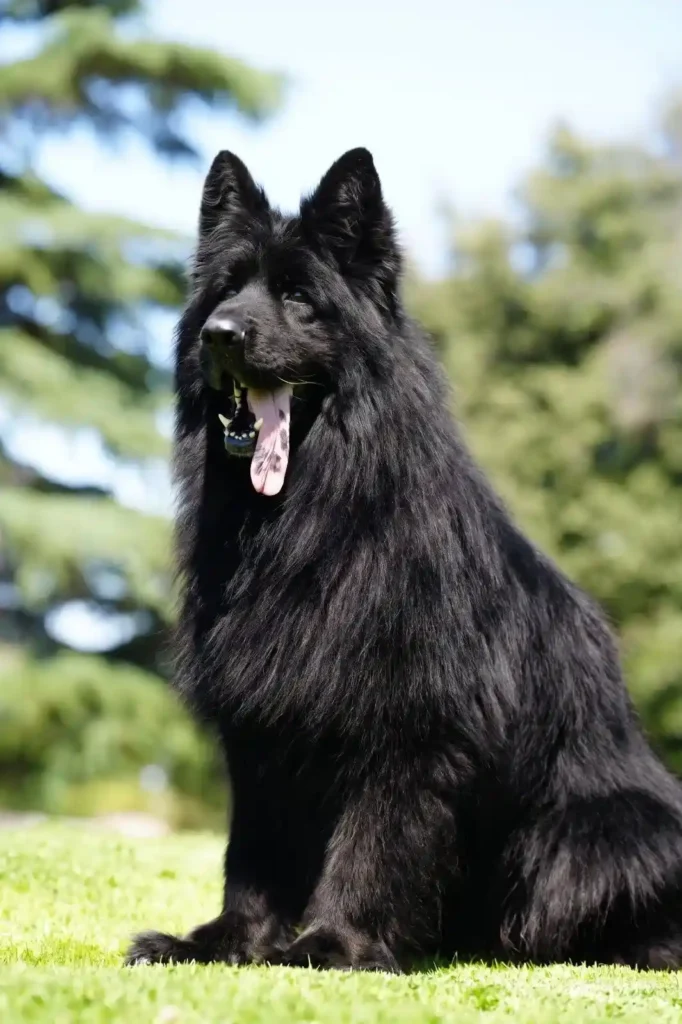
Royal Tribes K9 families may own black and red or full black German Shepherds.
Dark coats can become noticeably warm in direct sunlight.
That does not make a full black German Shepherd unsuitable for warm climates.
It means direct sun exposure deserves attention.
Shade becomes valuable.
Shorter exposure becomes valuable.
Earlier and later activity becomes valuable.
And remember that bright, sunny environments also bring significant UV exposure.
German Shepherd owners should already be aware that some breed-related eye conditions deserve attention, which makes our German Shepherd eye problems and pannus guide useful additional reading.
That article is not about heatstroke.
It complements this one by looking at another environmental issue owners may encounter in bright climates.
4:00–6:00 PM: Do Not Trust the Clock
A common mistake is assuming that late afternoon automatically means safe.
The sun may be lower.
The ground may still be holding hours of heat.
Humidity may still be high.
A sheltered backyard may feel comfortable while a black asphalt route remains hot.
So do not ask:
“Is it 5 PM yet?”
Ask:
“What are the conditions now?”
That is the practical answer to how hot is too hot for dogs.
You reassess instead of following the clock blindly.
Build a Three-Question Go/No-Go Test
Before the second outdoor session, ask yourself three things.
What is the environment doing?
Sun, humidity, ground temperature, airflow and shade.
What is my dog doing?
Normal breathing, normal energy, normal movement and normal interest—or already panting and seeking cool surfaces before exercise has even started?
What am I planning to ask the dog to do?
A short toilet walk is not the same heat demand as fetch, jogging or high-energy obedience.
If any one answer makes you uncomfortable, shrink the activity.
You can always exercise more later.
You cannot undo a serious heat emergency.
Puppies Need a Different Hot-Weather Plan
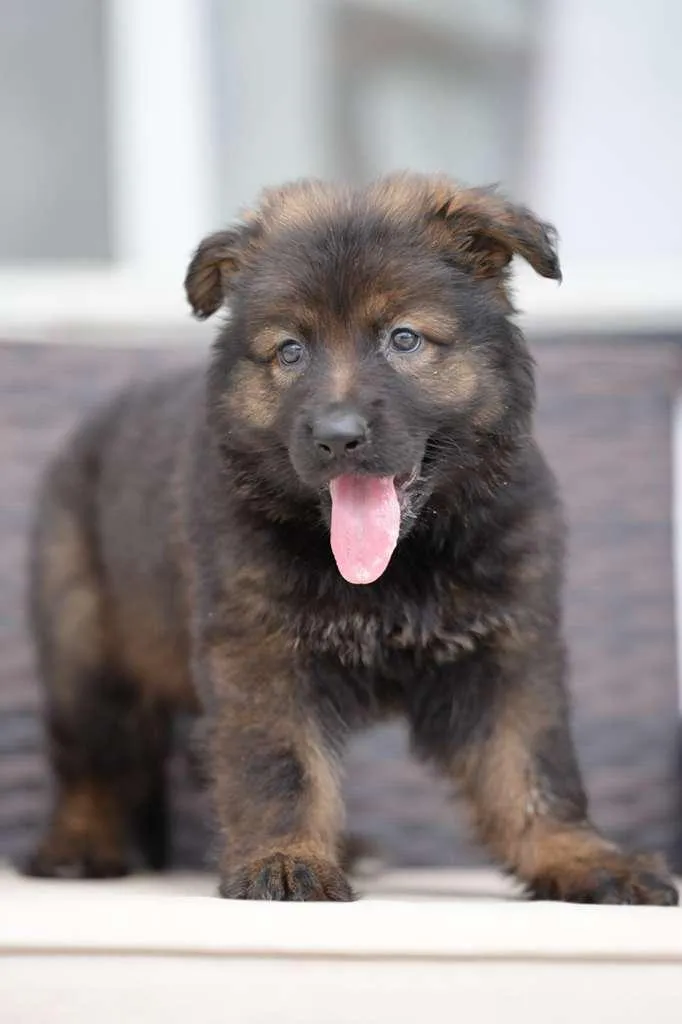
German Shepherd puppies create a special challenge.
They are energetic.
They often lack self-control.
They may continue playing because the game is more interesting than their own fatigue.
Owners should therefore control the duration and environment rather than expecting the puppy to decide when enough is enough.
Hot weather is also a good reason to shift more puppy work toward short indoor training sessions.
A puppy can practice recall, leash skills, handling, settling, focus, place work, and basic obedience without running around in afternoon sun.
This keeps development moving while reducing unnecessary heat load.
Senior German Shepherds Need Another Adjustment
An older German Shepherd may have less cardiovascular reserve, reduced mobility, arthritis, or other health changes that affect activity and recovery.
A senior dog may also walk more slowly, which can mean spending longer outside to cover the same route.
That matters.
Owners dealing with stiffness or movement changes can also review our senior German Shepherd arthritis and mobility guide.
Aging itself is not a reason to stop appropriate exercise.
It is a reason to become more precise about when, where, and how exercise happens.
Our German Shepherd lifespan and senior care guide adds useful context for owners planning long-term care as activity and tolerance change with age.
Health Changes Can Lower Heat Tolerance
A German Shepherd that handled summers well for years may suddenly struggle.
Do not automatically blame age or weather.
Body weight can change.
Cardiac or respiratory function can change.
Pain can alter how efficiently a dog moves.
Illness may affect hydration, circulation, or recovery.
Medication may also matter in some dogs.
If heat tolerance changes noticeably without an obvious explanation, speak with your veterinarian.
The German Shepherd health risks guide can also help owners understand why breed health should be evaluated as a complete picture instead of attributing every behavior change to climate.
After Sunset: The Second Activity Window
Evening may provide another useful exercise opportunity.
But sunset is not a magic reset button.
Check the pavement.
Check humidity.
Look at your dog’s breathing.
Consider what the dog already did that day.
If the morning session was substantial and the dog had indoor enrichment, the evening does not have to become a second marathon.
A moderate walk, sniffing session, or training period may complete the day perfectly.
Hot-climate management is often about distributing activity intelligently rather than trying to preserve the exact schedule you would use in winter.
What Does Early Overheating Actually Look Like?
The first change may not be dramatic.
The dog may simply begin panting harder than expected.
The tongue may stay extended.
The dog may repeatedly seek shade.
Speed may decrease.
Focus may disappear.
The German Shepherd who normally pulls toward the next activity may suddenly lag behind.
Those small changes matter because they can occur before collapse or severe illness.
More serious dog overheating signs can include abnormal weakness, significant drooling, vomiting or diarrhea, poor coordination, confusion, inability to continue normally, collapse, or seizures.
Do not wait for the most dramatic signs before responding.
If You Suspect Heatstroke, Change Priorities Immediately
At that point, the walk is over.
Training is over.
The priority is cooling and veterinary care.
Move the dog away from the heat and into a cooler environment.
Begin appropriate active cooling while contacting a veterinarian or emergency veterinary hospital and follow their instructions.
Airflow and water can be useful cooling tools.
Do not waste time waiting to see whether severe signs disappear on their own.
And do not force a distressed dog to drink large quantities of water.
A dog showing significant weakness, neurologic changes, collapse, vomiting, severe distress, or abnormal breathing needs urgent professional evaluation.
How Hot Is Too Hot for Dogs That Are Already Panting Indoors?
This question is especially important.
A German Shepherd lying quietly indoors should not be showing the same respiratory effort you expect after exercise.
If your dog is already struggling to cool down before you even attach the leash, outdoor exercise is not the next step.
Cool the environment.
Provide access to water.
Allow recovery.
Then reassess.
Persistent unusual panting at rest—especially when combined with weakness, distress, pain, coughing, vomiting, confusion, or another abnormal sign—should not automatically be blamed on weather.
Air Conditioning Changes the Entire Hot-Climate Equation
This is one reason German Shepherds can live very successfully in hot parts of the country.
The dog does not have to experience outdoor conditions twenty-four hours per day.
A properly cooled indoor environment provides a recovery zone.
That recovery zone is extremely valuable.
Think of your home as the place where the German Shepherd’s heat budget resets.
If the dog returns from every outing to another hot, poorly ventilated environment, heat can continue accumulating.
If the dog returns to a cooler environment, rests, drinks, and returns to normal, the next decision can be made from a much safer starting point.
Your House Should Have a Cool Zone
The dog should know where comfort lives.
That might be a cool floor.
A shaded room.
An air-conditioned area.
A fan-assisted resting location where appropriate.
The important part is choice.
A German Shepherd that wants to leave a warm bed and stretch out on tile should be able to do so.
Likewise, shade in a yard should be genuine shade—not a spot that was shady two hours ago but is now in direct sun.
Hot Cars Are Never Part of the Routine
A vehicle changes temperature quickly.
Do not treat an open window as climate control.
Do not assume that a short stop makes a parked car safe.
If your German Shepherd is traveling during hot weather, the trip needs active climate management.
Air conditioning should be working.
Water and appropriate breaks should be planned.
And the dog should never be left unattended in a parked hot vehicle.
That is a completely different risk level from an outdoor walk.
Can German Shepherds Adapt to Hot Weather?
Dogs can become somewhat accustomed to seasonal conditions over time.
But acclimatization should never be interpreted as immunity.
A German Shepherd that has lived in a warm state for five years can still suffer heat-related illness.
The dog still depends on panting, environmental cooling, hydration, and responsible activity choices.
Gradual adaptation may change tolerance.
It does not remove physiology.
The Hot-Climate Routine in One Day
A practical summer day might look like this:
Sunrise: meaningful walk or training.
Morning: recovery, breakfast, water and indoor rest.
Late morning: shorter outdoor breaks.
Midday: indoor enrichment instead of vigorous outdoor exercise.
Late afternoon: reassess the actual conditions instead of assuming they are safe.
Evening: second moderate activity window if the weather allows it.
Night: normal rest and recovery.
The exact times change by location and season.
The structure is what matters.
You move the routine around the weather instead of forcing the German Shepherd through the same schedule every month of the year.
So, Can a German Shepherd Thrive in a Hot Climate?
Yes.
A German Shepherd does not need a cold climate to have a healthy, active life.
But owners in warm regions need better heat awareness than owners who rarely experience hot weather.
That is especially important for long-coat German Shepherds, dark-coated dogs, high-drive adults, puppies, seniors, overweight dogs, and dogs with health conditions.
The key question is no longer simply how hot is too hot for dogs.
It becomes:
How much heat is the dog receiving?
How much heat is the dog producing?
And how effectively can the dog cool down afterward?
Once owners begin thinking in those terms, summer decisions become much clearer.
Quick Answers for German Shepherd Owners
Can German Shepherds live in places such as Texas, Arizona or Florida?
Yes. Many German Shepherds can live successfully in warm regions when they spend the hottest periods in a cooled environment and their exercise schedule is adapted to the climate.
Does a long-haired German Shepherd overheat more easily?
Coat length is one part of heat tolerance, but activity, humidity, sun exposure, body condition, age, health, airflow and recovery all matter. Long-coated German Shepherds need sensible grooming and heat management rather than simply being shaved.
How hot is too hot for dogs to walk?
There is no universal air temperature that guarantees safety for every dog. Humidity, sunlight, surface temperature, activity and individual health can move the risk dramatically. As conditions become hotter, shorten walks, shift them earlier or later, and replace strenuous activity with indoor enrichment.
Should I shave my German Shepherd in summer?
Routine shaving of a healthy double coat is generally not necessary as a heat-control strategy. Regular brushing, removal of loose undercoat, preventing mats, shade, cooling and schedule management are more useful priorities.
Is heavy panting normal in hot weather?
Panting is a normal cooling mechanism, but unusually intense panting, poor recovery, weakness, disorientation, vomiting, collapse, or other abnormal signs require immediate attention.
Do black German Shepherds need different summer care?
The basic heat-safety rules are the same, but dark coats can become hot in direct sunlight. Shade, timing and limiting prolonged direct sun exposure become especially useful.
Can puppies exercise outside in summer?
Yes when conditions are appropriate, but puppies should not be expected to regulate their own activity safely. Owners should control duration, timing and intensity and use indoor training when outside conditions are poor.
Final Thought: Change the Schedule Before You Change the Dog
The most effective hot-weather strategy is usually not complicated equipment.
It is timing.
A German Shepherd can have exercise.
Training.
Outdoor time.
Mental stimulation.
Family activity.
And a full life in a hot climate.
The schedule simply needs to respect the environment.
When owners understand how hot is too hot for dogs, they stop treating summer as a test of toughness.
They start managing heat as part of everyday German Shepherd care.
And that is what allows a powerful, active, double-coated breed to live safely and comfortably even when the climate is warm.