Dog illnesses can affect any breed, but German Shepherds have a health profile that makes certain conditions especially important for owners to understand. Some involve the joints or nervous system. Others affect digestion, the eyes, skin, or immune system. A few develop gradually over months or years, while others can become life-threatening within hours.
Knowing these risks does not mean expecting a German Shepherd to become sick.
Many German Shepherds live active lives without developing most of the conditions in this guide. Breed predisposition means only that particular diseases appear often enough in the breed to deserve additional awareness.
The most useful approach is not worrying about every possible diagnosis.
It is knowing three things:
What changes should you watch for?
Which conditions require immediate action?
Which health problems can be screened for or managed earlier when recognized promptly?
This guide brings the major German Shepherd health problems together in one place, including four conditions we cover in much greater detail elsewhere on Royal Tribes K9: bloat, exocrine pancreatic insufficiency, pannus, and perianal fistulas.
German Shepherd Health Risk Map
Instead of treating every condition as though it behaves the same way, it helps to organize them by the body system they affect.
| Health Area | Conditions to Know | Changes Owners May Notice |
| Joints | Hip and elbow dysplasia | Stiffness, altered gait, reluctance to exercise |
| Nervous system | Degenerative myelopathy | Hind-leg weakness, paw dragging, coordination changes |
| Stomach | GDV / bloat | Dry retching, abdominal distension, restlessness |
| Pancreas | EPI | Weight loss despite eating, large loose stools |
| Eyes | Pannus | Corneal haze, blood vessels, pigmentation |
| Perianal tissue | Perianal fistulas | Licking, painful defecation, draining lesions |
| Spine | Lumbosacral disease | Back pain, hind-limb weakness, difficulty rising |
| Skin & immune system | Allergic and inflammatory disease | Itching, recurring skin or ear problems |
| Whole body | Certain cancers and age-related diseases | Masses, weakness, weight loss, unexplained changes |
The table is not a diagnostic checklist. Many symptoms overlap between different dog illnesses, which is why the pattern and veterinary examination matter more than one isolated sign.
Why Breed-Specific German Shepherd Health Conditions Matter
German Shepherds were developed as athletic working dogs, and their physical and genetic background contributes to a recognizable set of health concerns.
Some conditions have an inherited component.
Some are associated with body structure.
Others involve abnormal immune-system activity.
Age also matters.
A young German Shepherd with orthopedic discomfort presents a different set of possibilities than an older dog gradually losing coordination in the hind limbs.
The benefit of breed-specific health knowledge is that owners can recognize unusual patterns earlier.
It does not allow an owner to diagnose a disease from home.
Think in Patterns, Not Individual Symptoms
A German Shepherd refusing to climb stairs once does not automatically have hip dysplasia.
One soft bowel movement does not mean EPI.
A slightly red eye does not automatically mean pannus.
And licking under the tail once does not mean perianal fistulas.
The pattern becomes more useful when symptoms persist, progress, or appear in recognizable combinations.
For example:
Weight loss + increased appetite + large abnormal stools points toward a very different diagnostic direction than:
Sudden abdominal enlargement + repeated dry-heaving + restlessness.
Both involve the digestive system.
But one usually develops chronically while the other may represent a true emergency.
That distinction is one of the most important skills an owner can develop when learning about dog illnesses.
Orthopedic Health: Hip and Elbow Dysplasia
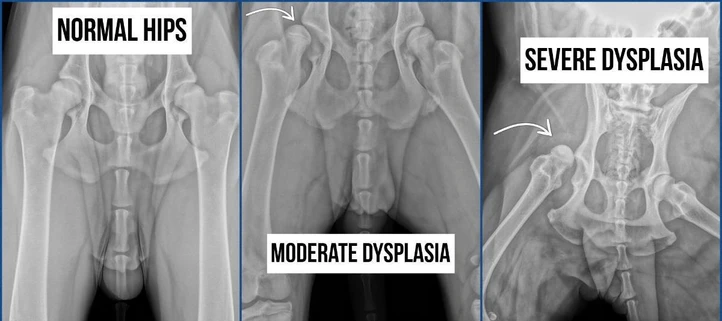
Hip and elbow dysplasia are among the best-known German Shepherd health issues.
Both involve abnormal joint development, although they affect different joints and involve different anatomical problems.
A dog with hip dysplasia may show stiffness after rest, difficulty rising, reluctance to jump, reduced willingness to exercise, an altered gait, or discomfort involving the rear limbs.
Elbow disease can produce front-leg lameness, stiffness, or reduced range of motion.
However, affected dogs do not all look identical.
Some structural abnormalities are discovered on radiographs before obvious clinical symptoms develop.
Others become noticeable because arthritis develops later.
Health Screening Matters Before Symptoms Appear
This is where health screening differs from waiting for disease.
Radiographic evaluation of breeding dogs can provide information about hip and elbow structure before a pairing is made.
Screening does not guarantee that every offspring will have perfect joints.
Development also involves genetics, growth, body condition, exercise, injury, and other factors.
But health screening allows breeders to make decisions with more information than appearance alone provides.
For owners, maintaining an appropriate body condition and avoiding unnecessary excess weight can also reduce stress placed on joints over the dog’s lifetime.
Neurologic Health: Degenerative Myelopathy
Degenerative myelopathy, commonly abbreviated DM, affects the spinal cord and usually appears later in life.
It typically does not begin with obvious pain.
Instead, owners may notice subtle hind-end changes.
A rear paw may occasionally scrape the ground.
Toenails may wear unevenly.
The dog may stumble more frequently.
One hind leg can appear less coordinated.
As the disease progresses, weakness and loss of coordination can become more significant.
DM Is Not the Only Cause of Weak Hind Legs
This point is important.
Older German Shepherds can develop arthritis, hip disease, spinal conditions, nerve problems, injuries, tumors, and other disorders that affect the hind limbs.
A dog dragging a paw should not automatically be diagnosed with DM because of its breed.
Veterinary neurological and orthopedic assessment helps determine which part of the body is actually causing the problem.
Genetic testing may identify risk associated with DM, but a genetic result alone does not diagnose clinical degenerative myelopathy in a symptomatic dog.

The Emergency Condition: Gastric Dilatation-Volvulus
Among the breed-associated dog illnesses discussed in this guide, GDV stands out because time matters immediately.
Gastric dilatation-volvulus occurs when the stomach becomes distended and rotates.
German Shepherds are large, deep-chested dogs, which places the breed among those owners should consider at increased risk.
Possible warning signs include:
Repeated attempts to vomit without producing normal vomit.
Sudden restlessness.
Excessive drooling.
A rapidly enlarging or tight abdomen.
Panting.
Weakness.
Pale gums.
Collapse.
The important mistake to avoid is waiting for every sign to appear.
A German Shepherd repeatedly dry-heaving while appearing distressed deserves urgent veterinary attention even if the abdomen does not yet look dramatically enlarged.
For the complete emergency guide, read our dog bloat warning signs and GDV guide.
That article is already published on RTK9 at /post/dog-bloat/.
The Digestive Condition That Can Hide Behind Hunger: EPI
Now compare GDV with another important German Shepherd digestive disorder.
Exocrine pancreatic insufficiency, or EPI, usually presents very differently.
Instead of becoming suddenly critically ill, a German Shepherd may continue eating enthusiastically while progressively becoming thinner.
That contradiction is one of the most recognizable clues.
The pancreas normally produces enzymes that help digest food.
When insufficient digestive enzymes are produced, nutrients cannot be used normally.
Owners may notice:
Persistent weight loss.
Increased or extreme hunger.
Large-volume stools.
Loose or pale stools.
Frequent bowel movements.
Poor coat condition.
Loss of muscle and body condition.
Excess gas.
A Hungry Dog Can Still Be Malnourished
This is what makes EPI confusing.
Owners see the German Shepherd eating.
They increase the food.
The dog eats even more.
But the weight continues disappearing.
The problem is not always the amount entering the bowl.
The problem may be the dog’s ability to digest and absorb what is being eaten.
A specific blood test, commonly called canine TLI or cTLI, is used when veterinarians investigate suspected EPI.
Treatment commonly includes pancreatic enzyme replacement with meals, nutritional management, and correction of vitamin B12 deficiency when necessary.
For the complete symptoms, testing, and management guide, read our EPI in dogs and German Shepherd digestive health guide.
The dedicated EPI article is also live on RTK9.
The Eye Condition Owners Can Actually See: Pannus
Some German Shepherd diseases create abnormal bloodwork or internal changes.
Pannus can create changes owners may actually see on the eye.
Pannus, also called chronic superficial keratitis, affects the normally transparent cornea.
German Shepherds have a recognized breed predisposition.
The disease often begins toward the outer edge of the cornea.
Owners may notice:
Fine blood vessels growing across the corneal surface.
A gray or pink haze.
Fleshy-looking inflammatory tissue.
Brown or dark pigment.
Changes affecting both eyes.
Gradual movement of the lesion toward the center.
Why Early Recognition Matters
The cornea needs to remain transparent for normal vision.
As inflammation and pigmentation progress toward the center, vision can eventually be affected.
One challenge is that pannus may not produce the severe eye pain that accompanies some other corneal diseases.
The German Shepherd can continue acting completely normal while the eye gradually changes.
That is why owners should know what their dog’s healthy eyes normally look like.
A new corneal blood vessel or patch of pigment is easier to notice when you regularly see the eyes in normal lighting.
For a visual explanation of progression and treatment, read our dog eye problems and German Shepherd pannus guide.
The article is published at /post/dog-eye-problems/.
The Painful Condition Hidden Under the Tail: Perianal Fistulas
Not all breed-associated dog illnesses are immediately visible.
Perianal fistulas can develop around the anus beneath the tail.
They are also called anal furunculosis.
The condition involves painful inflammatory tracts and ulcerated areas in the tissue surrounding the anus, and German Shepherds are strongly associated with the disease.
One reason the condition can progress before owners recognize it is location.
The lesions can be hidden by coat and tail position.
Behavior may reveal the problem first.
Watch for Behavioral Clues
A German Shepherd may begin repeatedly licking beneath the tail.
Sitting can become uncomfortable.
The dog may resist having the tail lifted.
Defecation may become painful.
The dog may strain or stop repeatedly during a bowel movement.
Advanced disease may cause drainage, bleeding, odor, or visible wounds.
These symptoms sometimes get mistaken for an ordinary anal gland problem.
But perianal fistulas are a different disease process and generally require a specific veterinary treatment strategy.
For symptoms, diagnostic questions, and treatment management, read our German Shepherd perianal fistulas guide.
The current site export confirms that dedicated article and URL.
Four Breed-Specific Conditions, Four Very Different Patterns
This comparison is useful because it shows why owners should not think of German Shepherd health problems as one category.
| Condition | Typical Pattern | Main Area | Urgency |
| GDV / Bloat | Sudden deterioration | Stomach | Emergency |
| EPI | Progressive weight loss and digestive signs | Pancreas | Needs veterinary diagnosis |
| Pannus | Gradual visible corneal changes | Eyes | Early treatment important |
| Perianal fistulas | Painful chronic inflammation | Perianal tissue | Prompt treatment important |
All four have special relevance to German Shepherds.
But their warning signs, diagnostic methods, treatments, and urgency are completely different.
That is why breed knowledge should improve observation—not encourage self-diagnosis.
Degenerative Lumbosacral Disease and Back Problems
German Shepherds can also develop disorders involving the lower back and lumbosacral region.
Owners may notice difficulty rising, reluctance to jump, pain around the lower back, decreased activity, hind-limb weakness, or changes in tail movement.
Some dogs may hesitate before getting into a vehicle or climbing stairs.
These signs overlap with hip disease, arthritis, neurological disease, and injury.
That overlap makes examination important.
The location of the visible symptom does not always identify the origin of the problem.
A German Shepherd limping in a rear leg might have a hip, knee, spinal, muscular, or neurological issue.
Allergies and Chronic Skin Disease
German Shepherds can also experience recurring allergic and inflammatory skin problems.
Owners may notice itching, licking, paw chewing, redness, recurrent ear problems, hair loss, or secondary skin infections.
Again, the visible symptom is only the beginning.
Itching can result from environmental allergies, food-responsive disease, parasites, infection, or other skin disorders.
Recurring problems require more than repeatedly suppressing the symptom.
The goal is identifying what is driving the inflammation.
This also illustrates why the term dog illnesses includes conditions with completely different diagnostic approaches.
A blood test appropriate for one disease might provide little useful information for another.
Cancer and Unexplained Changes in Older German Shepherds
As German Shepherds age, the health conversation changes.
Not every change in an older dog is simply “old age.”
Unexplained weight loss.
A new mass.
Persistent weakness.
Abdominal enlargement.
Reduced stamina.
Repeated collapse.
Pale gums.
Unexplained bleeding.
Loss of appetite.
Major behavioral change.
These signs deserve veterinary assessment.
Several cancers can affect German Shepherds, just as they can affect other breeds.
The goal is not for owners to decide which cancer a dog might have.
The goal is recognizing when a new change should not be dismissed.
Dog Illnesses by Life Stage
Age can help owners organize what they monitor.
It does not create strict boundaries.
Puppyhood
During puppyhood, veterinary attention focuses heavily on growth, nutrition, vaccination, parasite control, congenital abnormalities, skeletal development, and normal physical development.
Owners should monitor gait, appetite, stool quality, growth pattern, energy, and developmental changes.
Adolescence and Young Adulthood
As the German Shepherd grows, orthopedic structure becomes increasingly relevant.
Certain breed-associated conditions such as EPI can also become apparent in younger dogs.
Training and exercise increase, so injuries and physical discomfort may become easier to notice.
Mature Adulthood
Adult dogs benefit from routine health monitoring even when they appear completely healthy.
Changes in weight, appetite, stool, skin, eyes, mobility, and exercise tolerance deserve attention.
This is also when knowing emergency conditions such as GDV becomes particularly important.
Senior Years
Older German Shepherds may develop arthritis, spinal disease, neurologic changes, cancers, dental disease, and other age-associated conditions.
The mistake is assuming every symptom is normal simply because the dog is older.
Age increases the importance of monitoring; it does not eliminate the need for diagnosis.
What Can Actually Be Health Tested?
This is where responsible health discussions need precision.
There is no single “German Shepherd health test” that predicts every disease in this article.
Different conditions require different approaches.
Hip and elbow structure can be evaluated radiographically.
Certain inherited risks can be assessed with available DNA tests.
Other conditions, such as pannus or perianal fistulas, do not have a simple routine puppy test that guarantees the dog will never develop them.
GDV risk cannot be eliminated by a blood test.
EPI is diagnosed when clinical signs and appropriate pancreatic testing indicate disease.
Therefore:
Health screening reduces uncertainty. It does not eliminate biology.
This distinction matters both to breeders and puppy buyers.
Genetic Risk Does Not Mean Genetic Certainty
People often use words such as genetic, hereditary, predisposed, and inherited as though they mean exactly the same thing.
They do not always.
Some diseases are influenced strongly by a particular genetic variant.
Others involve multiple genes plus environment.
Some conditions are strongly associated with a breed even though there is no simple DNA test capable of predicting exactly which individual will become affected.
A responsible discussion of hereditary diseases in German Shepherds should therefore avoid two extremes.
One extreme is pretending genetics does not matter.
The other is claiming that health testing can guarantee a puppy will never develop any disease.
Neither is accurate.
What Owners Can Control
Owners cannot change the genes a dog was born with.
But that does not make daily care irrelevant.
Several areas remain under the owner’s control:
Maintaining appropriate body condition.
Feeding complete, appropriate nutrition.
Providing suitable exercise.
Avoiding chronic obesity.
Keeping vaccination and parasite-prevention plans current according to veterinary guidance.
Watching for behavioral or physical changes.
Maintaining routine veterinary care.
Seeking treatment promptly when something changes.
Following long-term treatment consistently when a chronic condition is diagnosed.
Knowing where the nearest emergency veterinary hospital is located.
These actions do not guarantee prevention of every dog illness.
They improve the chance that problems are recognized and managed appropriately.
The German Shepherd Owner’s Monthly Health Check
A useful home check can take only a few minutes.
You are not performing a veterinary examination.
You are learning what is normal for your individual dog.
Body Condition
Run your hands over the ribs and spine.
Has the dog unexpectedly lost or gained weight?
Does muscle condition look different?
Movement
Watch the dog walk away from you and toward you.
Notice stiffness, limping, paw dragging, or hesitation.
Eyes
Look at both eyes in ordinary light.
Watch for new redness, haze, pigmentation, discharge, or squinting.
Skin and Coat
Part the coat in several areas.
Check for irritation, hair loss, sores, excessive dandruff, or persistent licking.
Eating and Drinking
Notice changes rather than obsessing over one meal.
Is appetite substantially different?
Is water consumption changing?
Stool
Know what normal bowel movements look like for your dog.
Persistent changes in frequency, volume, consistency, blood, or mucus can provide useful diagnostic information.
Behavior
Pain can appear as behavior.
A normally social dog that suddenly avoids touch, refuses to sit, stops jumping, or becomes unusually withdrawn may be physically uncomfortable.
Emergency, Prompt Appointment, or Monitor?
One of the most useful ways to think about dog illnesses is by urgency.
Emergency
Seek immediate veterinary care for signs such as repeated unproductive retching with distress, severe abdominal enlargement, collapse, major breathing difficulty, severe trauma, uncontrolled bleeding, or another rapidly deteriorating condition.
Prompt Veterinary Appointment
Arrange evaluation when you notice persistent weight loss, recurring diarrhea, progressive eye changes, painful defecation, repeated licking of a painful area, ongoing lameness, new neurologic signs, or another persistent change.
Monitor Normal Variation
Not every small variation requires panic.
A single soft stool, one tired day after unusual activity, or a temporary minor change may resolve.
What matters is progression, persistence, severity, and the presence of multiple abnormalities.
Why Early Detection Often Starts With Knowing Your Own Dog
Generic symptom lists have limits.
You know what is normal for your individual German Shepherd.
You know how quickly the dog normally eats.
How eagerly it rises in the morning.
How it climbs stairs.
What the normal stool looks like.
How clear the eyes normally appear.
How much the dog normally drinks.
How comfortably it sits.
That baseline is powerful.
A subtle change becomes much easier to recognize when you already understand normal.
Health Records Are More Valuable Than Memory
Keep important health information organized.
That can include:
Vaccination history.
Medication history.
Previous laboratory results.
Radiographs and screening certificates.
Weight history.
Surgical records.
Chronic diagnoses.
Previous adverse medication reactions.
Family health information when available.
For chronic conditions, even smartphone photographs can help document visible progression when your veterinarian finds them useful.
Good records make it easier to compare today with six months or three years ago.
What Puppy Buyers Should Ask About German Shepherd Health
A responsible puppy decision should include more than color, coat length, or photographs.
Ask what health screening has been performed on the parents.
Ask to see the actual records.
Understand what each test evaluates.
Ask about relevant health history in the pedigree when information is available.
Ask what veterinary care the puppy has received.
And understand the breeder’s written health policies.
At the same time, avoid anyone promising that a puppy can be guaranteed never to develop a medical condition.
Biology does not work that way.
A responsible breeding program reduces known risks and documents what has been evaluated.
The Four Health Guides That Expand This Article
The four conditions below have enough complexity that each deserves its own detailed resource:
Sudden abdominal emergency: our German Shepherd dog bloat and GDV guide explains the warning signs and emergency response.
Chronic weight loss despite hunger: our EPI in dogs guide explains symptoms, cTLI testing, enzymes, B12, and long-term management.
Progressive corneal changes: our German Shepherd pannus and dog eye problems guide covers early eye changes and veterinary treatment.
Pain beneath the tail: our German Shepherd perianal fistulas guide covers anal furunculosis, diagnosis, treatment, and recurrence.
Together, these articles turn this main health guide into a connected German Shepherd health cluster rather than four isolated posts.
Frequently Asked Questions About Dog Illnesses in German Shepherds
What Are the Most Important German Shepherd Health Problems to Know About?
German Shepherd owners should be familiar with orthopedic disease such as hip and elbow dysplasia, degenerative myelopathy, GDV or bloat, EPI, pannus, perianal fistulas, spinal disease, and recurring skin or immune-related conditions.
Not every German Shepherd will develop these disorders.
Are German Shepherds an Unhealthy Breed?
It is more accurate to say that German Shepherds have several well-recognized breed predispositions.
Individual health varies substantially.
Genetics, responsible breeding, health screening, nutrition, body condition, exercise, preventive care, and early veterinary treatment all contribute to the health of an individual dog.
What Is the Most Dangerous German Shepherd Health Emergency?
GDV is particularly important because it can progress rapidly and become fatal without emergency treatment.
Repeated attempts to vomit without producing anything, abdominal distension, marked restlessness, weakness, or collapse require immediate attention.
Why Is My German Shepherd Losing Weight Even Though It Eats Constantly?
EPI is one possible explanation, particularly when weight loss occurs with increased hunger and large or abnormal stools.
Parasites, intestinal disease, diabetes, cancer, and many other disorders can also cause weight loss.
Veterinary testing is necessary to determine the cause.
What Eye Disease Is German Shepherd Specific?
Pannus, or chronic superficial keratitis, has a strong association with German Shepherds.
Owners may notice blood vessels, haze, inflammatory tissue, or pigmentation developing across the cornea.
Why Is My German Shepherd Constantly Licking Under Its Tail?
Possible causes include anal sac disease, parasites, irritation, infection, gastrointestinal problems, and perianal fistulas.
Because German Shepherds have a particular predisposition to perianal fistulas, persistent painful licking should be examined rather than automatically assumed to be an anal gland issue.
What Causes Weak Back Legs in German Shepherds?
There are many possibilities, including hip disease, arthritis, degenerative myelopathy, spinal disease, injury, muscular disorders, and other neurologic conditions.
A symptom such as hind-leg weakness cannot identify the cause by itself.
Can German Shepherd Health Problems Be Prevented Through Breeding?
Responsible breeding and appropriate health screening can reduce risk for some inherited or developmental conditions.
They cannot guarantee protection against every disease a dog might develop during its lifetime.
Which German Shepherd Diseases Have Genetic Tests?
DNA tests exist for certain inherited risks, including degenerative myelopathy-associated variants.
Other conditions are assessed using radiographs, physical examination, clinical testing, or family history rather than a single genetic test.
How Often Should a Healthy German Shepherd See a Veterinarian?
Preventive examination frequency depends on age and individual health.
Puppies generally require more frequent visits during their initial vaccination and development period, while adults usually follow a routine preventive schedule determined with their veterinarian.
Senior or chronically affected dogs may need more frequent monitoring.
Are Changes in an Older German Shepherd Always Normal Aging?
No.
Slowing down can accompany aging, but pain, weakness, weight loss, neurologic changes, new masses, appetite changes, or major behavioral changes should not automatically be attributed to age.
Should I Test My German Shepherd for Every Possible Disease?
There is no universal test for every condition.
A better approach is age-appropriate preventive care, recognized breed health screening, individual risk assessment, and targeted diagnostic testing when symptoms appear.
Final Thoughts on Dog Illnesses and German Shepherd Health
Understanding dog illnesses in German Shepherds is not about creating a list of everything that could go wrong.
It is about knowing which patterns matter.
Hip and elbow problems affect movement.
Degenerative myelopathy can gradually change coordination.
EPI can leave a German Shepherd hungry while the body becomes thinner.
Pannus can quietly alter the clear surface of the eye.
Perianal fistulas can create significant pain beneath the tail.
And GDV can transform a healthy-looking dog into an emergency patient within a very short time.
These conditions do not have one cause, one test, or one treatment.
That is exactly why breed-specific health education matters.
Owners should understand what can be screened before symptoms appear, what needs routine veterinary evaluation, what can require lifelong management, and what demands immediate emergency action.
The goal is not perfect prediction.
The goal is better preparation.
Know your German Shepherd’s normal weight, appetite, movement, eyes, coat, stool, and behavior. Keep useful health records. Pay attention when something changes. And when a change persists or becomes severe, use veterinary diagnosis rather than guessing.
That combination—responsible breeding, appropriate screening, attentive ownership, and timely veterinary care—is far more valuable than trying to promise that any individual dog will never experience illness.
For a broader veterinary overview of health considerations seen in the breed, see VCA’s German Shepherd health profile.