If you are comparing a working line vs show line German Shepherd, the most important question is not which line is universally better. It is which type of dog better matches your goals, experience, schedule, household, and expectations. Both come from the same breed, and both should retain the German Shepherd Dog’s intelligence, confidence, trainability, athleticism, and working heritage. The difference is mainly in what generations of breeders have emphasized.
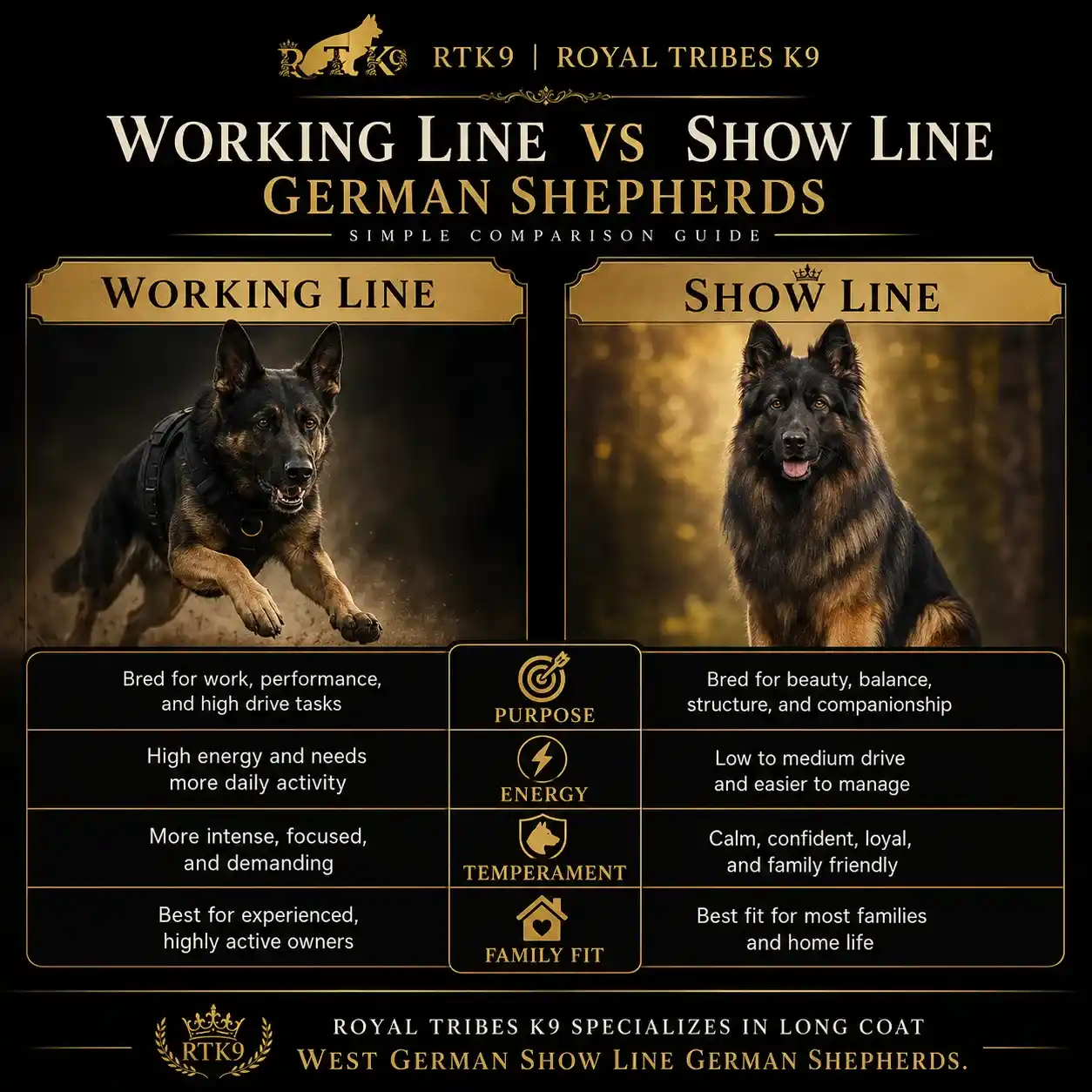
Working-line breeding programs generally place heavier selection pressure on working ability, drives, endurance, nerve, task performance, and trainability under pressure. Show-line programs place greater emphasis on conformation, movement, breed type, presentation, and the ability to meet a written breed standard while still preserving sound temperament and functional ability. Those are broad tendencies, not guarantees about every individual dog.
Royal Tribes K9 specializes in long coat West German show line German Shepherds from some of the best bloodlines we select for our program because that direction fits the kind of dog many of our families are looking for: a striking German Shepherd with pedigree, structure, stable character, trainability, and a temperament that can integrate into family life. This guide explains the differences without pretending that every working line or every show line is identical.
Working Line vs Show Line German Shepherd: 7 Key Differences
| Factor | Working Line Tendency | Show Line Tendency |
|---|---|---|
| Primary breeding emphasis | Working ability, drive, performance, nerve, task suitability | Conformation, movement, breed type, structure, temperament |
| Energy and drive | Often higher and more persistent working drive | Often more moderate, but still active and trainable |
| Daily lifestyle | Usually benefits from structured work, sport, advanced training, or demanding outlets | Often easier to balance between training, activity, and family life |
| Structure | Often selected primarily for functional performance | Selected more directly against a conformation standard and movement |
| Best match | Experienced handlers with clear working or sport goals | Families and owners seeking a companion with show-line pedigree and trainability |
| Training needs | Frequently needs more challenging, consistent outlets for drive | Still needs training and exercise, but may be easier for many companion homes to manage |
| Individual variation | Significant variation by pedigree, breeder, and dog | Significant variation by pedigree, breeder, and dog |
The table is a starting point, not a substitute for evaluating a specific pedigree and puppy. A lower-drive working-line dog can be easier to live with than a very intense show-line dog, and a well-bred show-line German Shepherd can still be athletic, confident, and capable of serious training. The individual dog matters.
What Does “Working Line German Shepherd” Actually Mean?
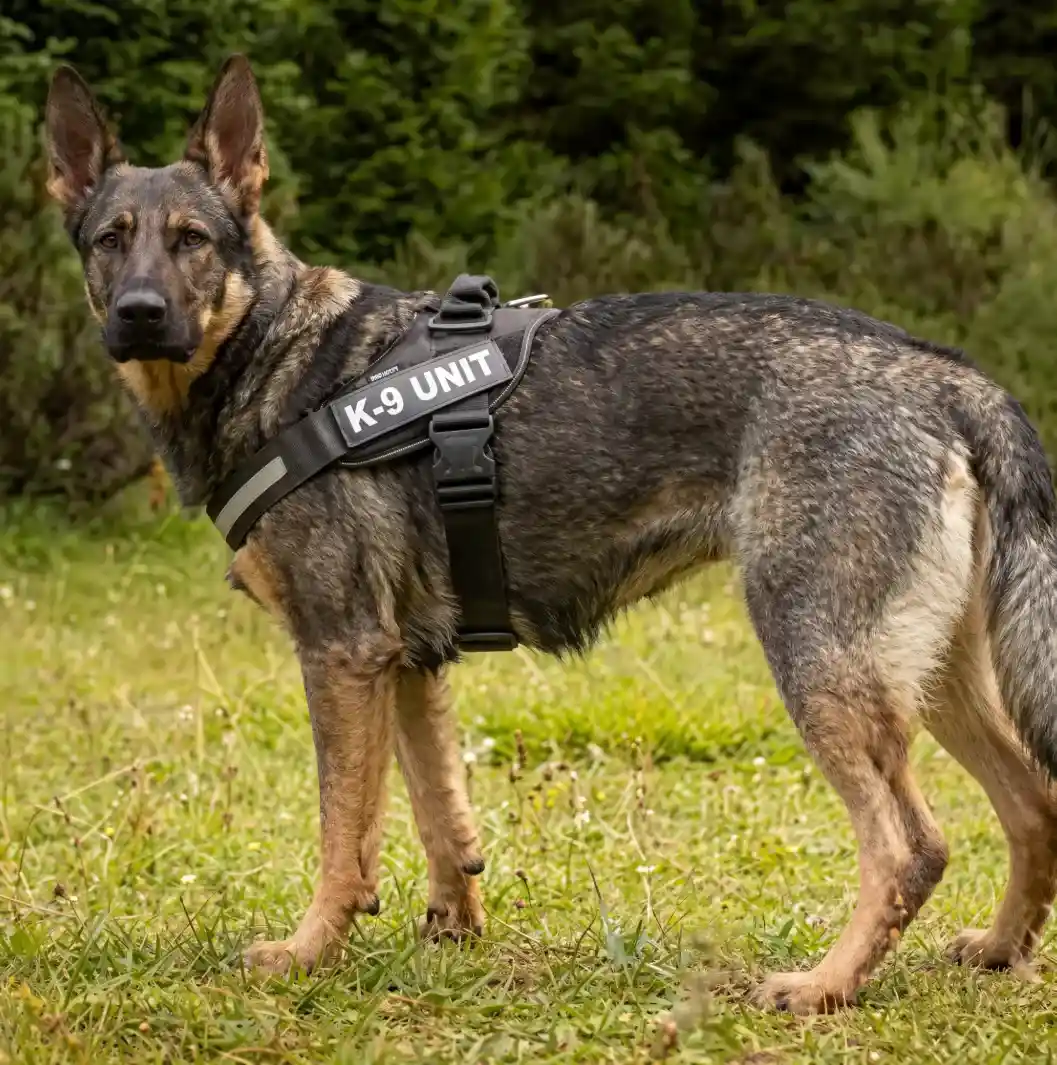
A working line German Shepherd is generally produced from bloodlines where breeders put strong emphasis on performance traits. Depending on the program, that can include obedience, tracking, protection sports, police or military suitability, scent work, herding, search and rescue, or other demanding tasks. Breeders may place particular importance on environmental confidence, recovery from stress, food or toy motivation, prey drive, grip behavior, endurance, and willingness to work with a handler.
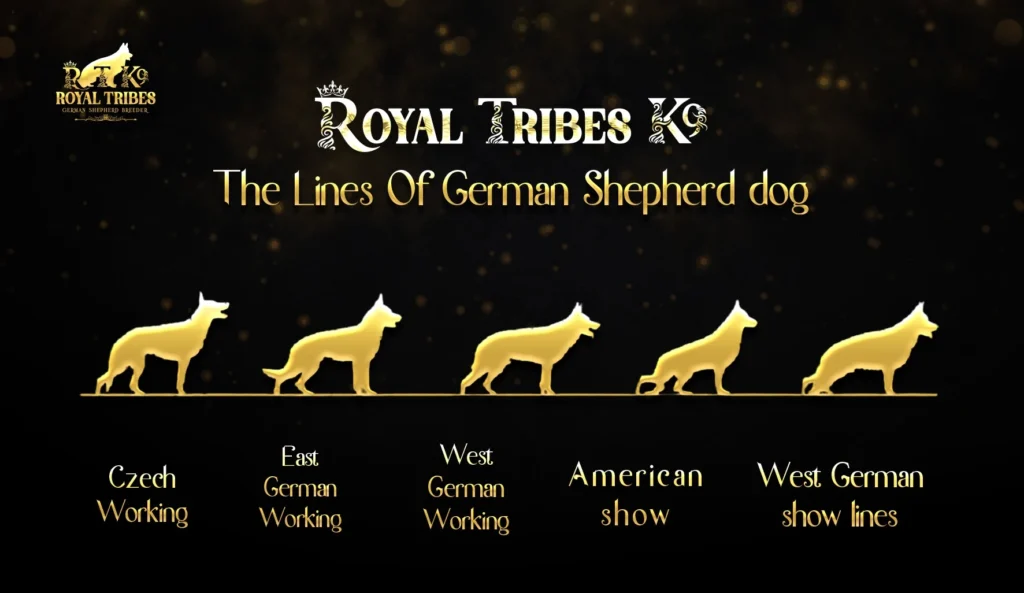
The term working line is still broad. West German working lines, Czech lines, and bloodlines historically associated with East German or DDR breeding are not interchangeable labels for one exact temperament or structure. Even within the same pedigree, littermates can differ in drive, confidence, social style, and intensity.
Working Line German Shepherd Temperament
The working line German Shepherd is often attractive to owners who want a dog that is highly engaged, energetic, persistent, and ready to train. That can be a major advantage for sport and advanced working goals. It can also be too much dog for an owner who mainly wants a relaxed household companion and does not enjoy structured training.
High drive should not be confused with unstable temperament, aggression, or poor manners. Likewise, lower drive should not be confused with weakness. Good breeding is about producing the temperament required for the intended purpose while maintaining sound nerves and predictable behavior.
Who Is Usually a Good Match for a Working Line?
- Owners who genuinely enjoy frequent, structured training.
- Handlers interested in dog sports, tracking, advanced obedience, scent work, or working activities.
- People prepared to channel drive rather than simply trying to tire the dog out.
- Experienced homes that understand arousal, impulse control, environmental exposure, and recovery.
- Owners who choose the individual dog based on temperament instead of buying a working pedigree for status alone.
What Does “Show Line German Shepherd” Mean?
A show line German Shepherd comes from breeding programs that give more weight to conformation and movement while preserving the breed’s essential character. A conformation standard is not simply a beauty contest. It describes the ideal structure, proportions, movement, and temperament expected of the breed. The German Shepherd Dog Club of America breed standard describes the German Shepherd as strong, agile, well muscled, balanced, alert, confident, and neither timid nor hostile.
Show line also does not mean one single type. American show lines and West German show lines have different breeding histories and selection traditions. Royal Tribes K9 focuses specifically on West German show line German Shepherds, including long coat dogs from imported European pedigrees.
Why West German Show Lines Appeal to Many Families
Many families want the recognizable German Shepherd presence without intentionally selecting for the highest possible working intensity. A thoughtfully bred West German show line dog can offer a useful balance: trainability, confidence, athletic ability, family attachment, and a strong breed look, while often being more manageable for a companion-oriented household than a dog bred primarily for very high working drive.
That does not make show-line dogs low-energy. German Shepherds remain active, intelligent dogs that need exercise, training, boundaries, socialization, and involvement with their family. The American Kennel Club likewise emphasizes the breed’s intelligence, trainability, work ethic, and need for an owner who understands the commitment.
Drive, Energy, and the Off-Switch
One of the most practical differences in a working line vs show line German Shepherd comparison is how the dog’s drive shows up in everyday life. A high-drive dog may repeatedly seek activity, chase opportunities to work, become intensely focused on toys or movement, and need deliberate training to settle. A more moderate dog may still enjoy obedience, play, hiking, and training but transition back to household calm more easily.
Working Drive Is More Than Exercise
An owner cannot always solve high drive by adding longer walks. Working dogs often need mental tasks, clear rules, training progression, problem solving, impulse control, and purpose. Without those outlets, an intense dog may invent its own entertainment. That can show up as pacing, destructive behavior, over-arousal, fixation, nuisance barking, or difficulty settling.
Show-Line Dogs Still Need Real Training
Choosing a show line is not a shortcut around training. A German Shepherd puppy still needs house manners, crate training, leash skills, recall, neutrality around people and dogs, appropriate exposure, and a reliable way to settle. The difference is that many companion homes find a balanced show-line temperament easier to integrate into normal family routines.
Structure and Movement: Why the Dogs Can Look Different
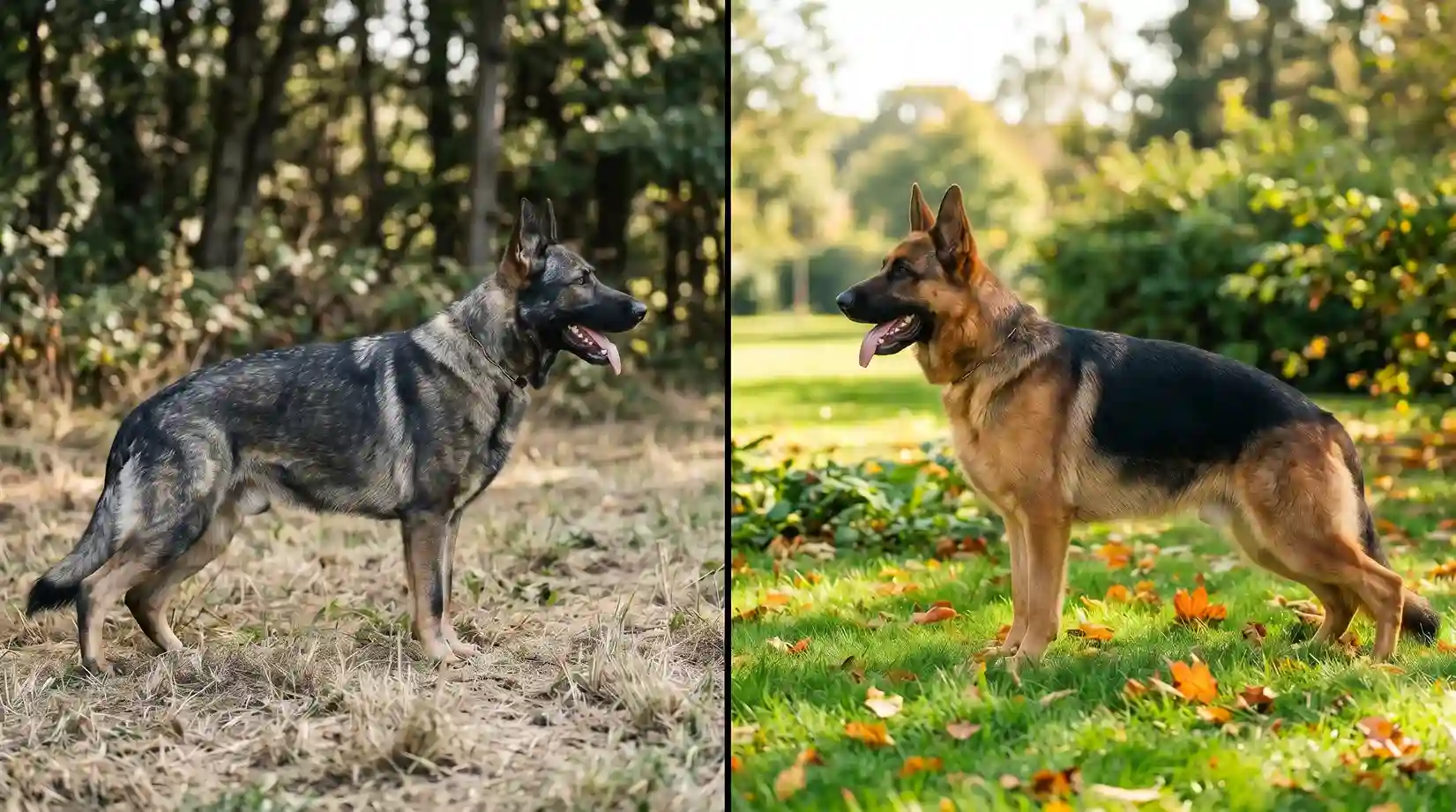
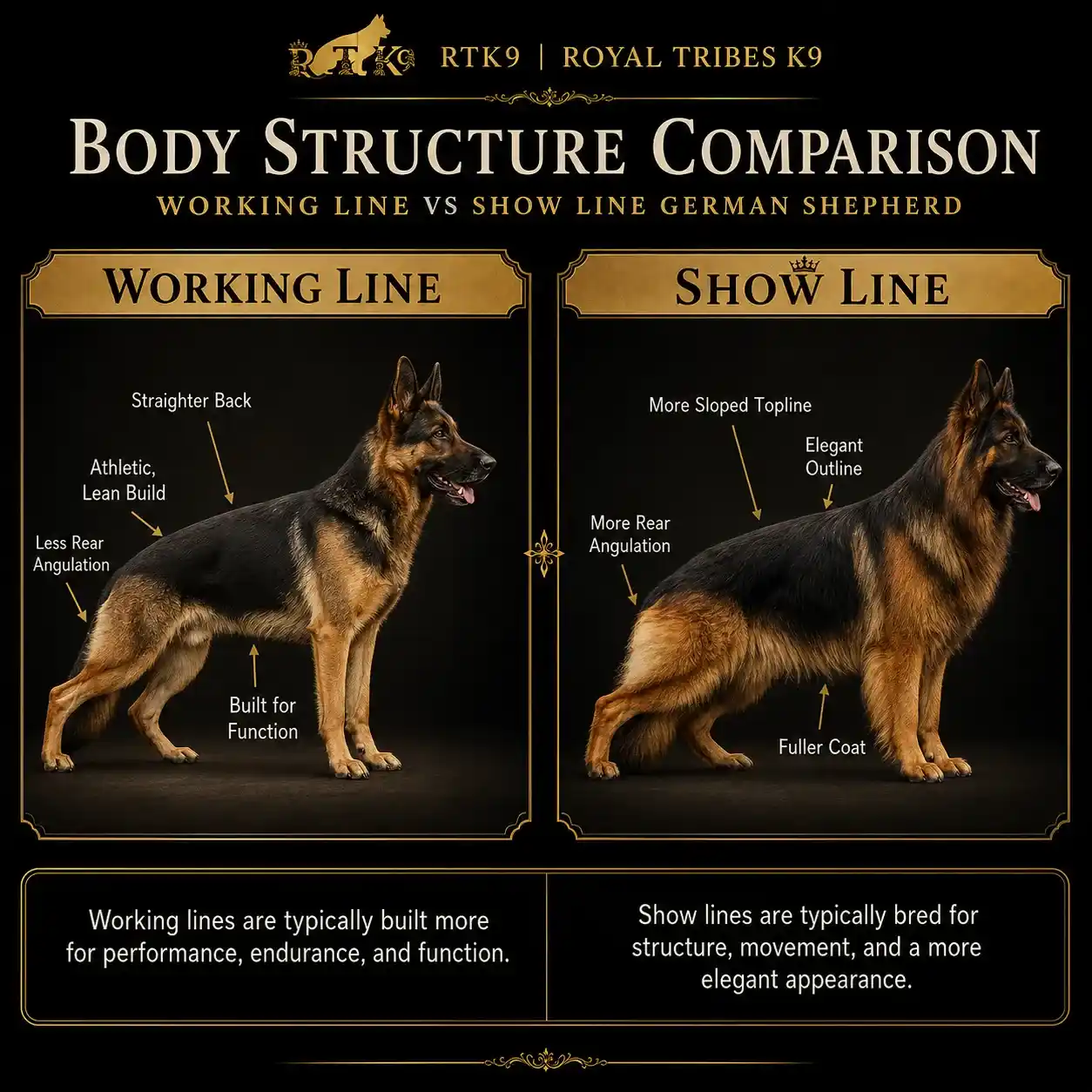
Another visible difference between working and show lines is structure. Working-line breeders may prioritize functional performance traits first, while show-line breeders deliberately evaluate how a dog conforms to a written standard. That can affect outline, angulation, movement, bone, head type, pigmentation, coat, and the overall impression of the dog.
It is important not to reduce this subject to internet stereotypes. A German Shepherd should not be judged from one stacked photograph or from exaggerated claims about a dog’s back. Sound structure is evaluated as a complete system: proportions, topline, forequarters, hindquarters, feet, gait, muscle, coordination, and the dog’s ability to move efficiently.
West German Show Line Appearance
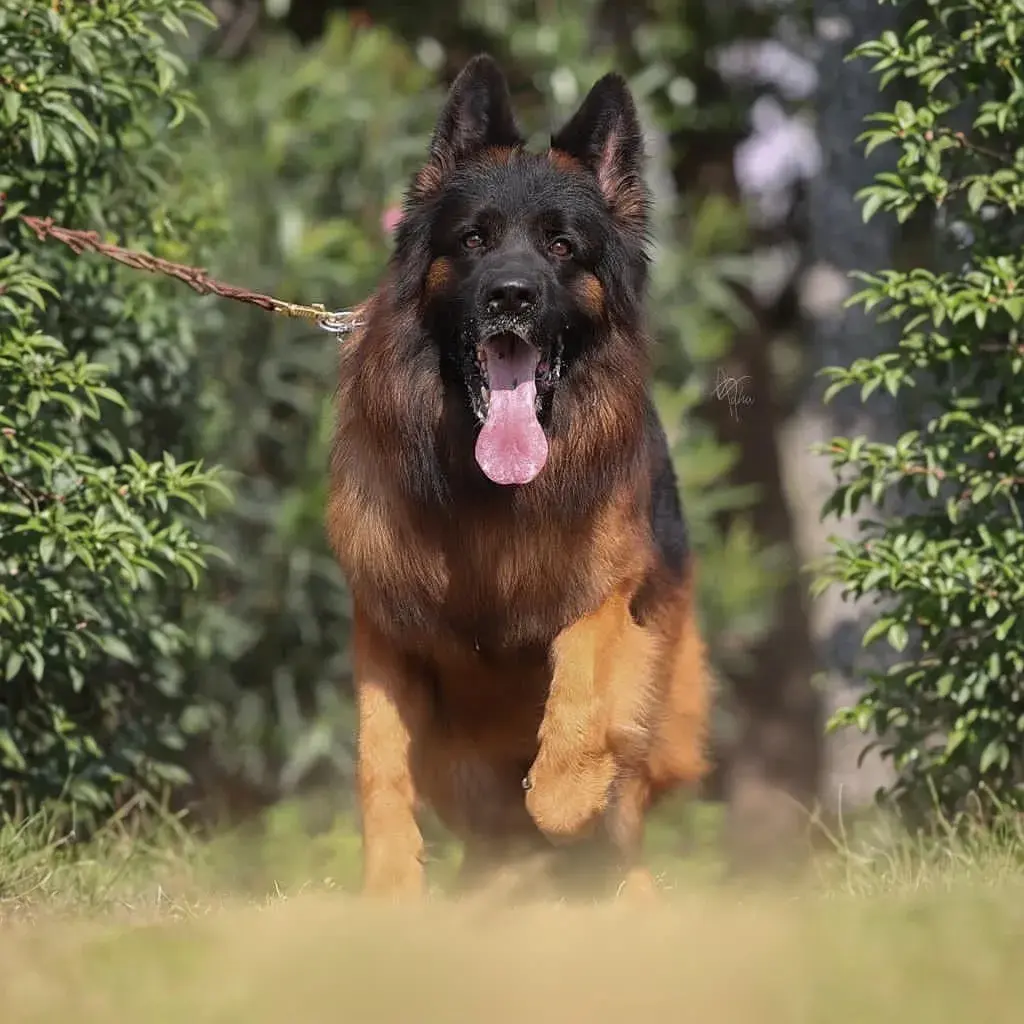
West German show line German Shepherds are often recognized for strong breed type, expressive heads, substantial bone, rich pigment, and the black-and-red coloration many families associate with European show pedigrees. Long coat examples add a fuller coat around the neck, body, tail, and furnishings, but coat length does not replace the need for temperament, health, and structural quality.
Which German Shepherd Is Better for a Family?
There is no universal answer, but for a typical family seeking a companion, a carefully selected show-line German Shepherd is often the more practical starting point. The reason is not that working lines are ‘bad family dogs.’ Many are devoted, social, stable dogs. The issue is whether the household actually wants the level and style of engagement the individual working-line dog requires.
Families should consider children, other pets, work schedules, travel, training experience, activity level, yard access, and how much daily structure they realistically want to provide. A breeder should help match the individual puppy rather than assuming every puppy from one line has the same temperament.
A Family-Focused Buyer Should Ask
- How intense are the sire and dam in everyday life?
- Do they settle calmly in the house after activity?
- How social and environmentally confident are they?
- What type of training or work do the parents perform?
- How does the breeder evaluate puppy temperament and family fit?
- What health information and pedigree records are available?
- Is the breeder recommending this puppy because of temperament, or only because of color and appearance?
You can learn more about the dogs behind our breeding program on the Our Studs and Our Dams pages. Those pages are important because the best prediction of a puppy’s potential comes from looking at the complete breeding program, not a generic line label.
For readers researching working line vs show line German Shepherd, this outside reference adds independent context. For independent historical context, the German Shepherd Dog Club of America breed history traces the breed from its early standardization to the versatile German Shepherd known today.
Which German Shepherd Is Better for Sport or Serious Work?
For owners whose primary goal is demanding sport or operational work, a working-line pedigree may make more sense because those breeding programs often select specifically for the drives and performance traits required for that job. Even then, the correct dog depends on the exact sport, the handler’s skill, and the individual dog’s nerve, motivation, health, and trainability.
A show-line German Shepherd can still earn obedience, tracking, temperament, and working titles. The categories are not absolute walls. The more important question is whether the breeder’s dogs have the traits needed for your goal.
German Shepherd Bloodlines Matter More Than the Label Alone
The phrase German Shepherd bloodlines matters because two dogs both called ‘show line’ can come from very different families, and two dogs both called ‘working line’ can have very different drives. A pedigree gives context about ancestry, but responsible evaluation also looks at the actual dogs: temperament, health, structure, working ability, longevity, and what previous breedings have produced.
This is one reason we encourage buyers to look beyond marketing labels. Ask which dogs are imported, what their pedigrees show, what health information is available, and why a particular sire and dam were paired. Our About Royal Tribes K9 page explains more about the breeding program and the qualities we prioritize.
Health Should Not Be Treated as a Working-Line vs Show-Line Argument
Neither label automatically guarantees better health. Health risk is influenced by genetics, family history, selection decisions, screening, structure, environment, nutrition, conditioning, and chance. A responsible buyer should evaluate the health information available for the parents and ask how the breeder handles concerns such as hips, elbows, inherited conditions, and long-term support.
Royal Tribes K9 families can also review our health guarantee and discuss the health records connected to a specific puppy before making a decision.
Why Royal Tribes K9 Focuses on West German Show Line German Shepherds
Our program is centered on imported West German show line German Shepherds because that direction fits our goal: exceptional long coat German Shepherds with strong pedigree, structure, movement, pigment, stable character, and family suitability. We are not trying to produce the highest-drive working dog for every household. We are trying to produce German Shepherds that families can be proud to live with, train, travel with, and enjoy.
That includes black-and-red and full black German Shepherds from carefully selected bloodlines. Appearance matters to our program, but it is only one part of the decision. Temperament, health information, pedigree, structure, and how a dog fits the intended home remain central.
How to Choose: Working Line vs Show Line German Shepherd
When deciding between a working line vs show line German Shepherd, start with your actual life rather than the dog you imagine owning. A very impressive working pedigree can become frustrating if the owner does not enjoy training. A beautiful show-line dog can also become difficult if the family underestimates exercise, socialization, or adolescence.
| Your Main Goal | Usually Start By Exploring |
|---|---|
| Competitive working sport or demanding performance goals | Working-line programs selected for the exact sport or job |
| Active family companion with strong breed type | Balanced show-line programs with proven family temperaments |
| Long coat West German show line companion | Breeders specializing in long coat West German show pedigrees |
| Protection-oriented training | An experienced trainer and breeder who can evaluate the individual dog rather than relying on a line label |
| First German Shepherd | A breeder who prioritizes predictable temperament and provides honest matching guidance |
Do Not Choose Only by Color
Black, black-and-red, coat length, and overall appearance may influence preference, but they should not determine the entire purchase. The best German Shepherd for family life is the one whose temperament, health background, energy, and training needs match the home.
Do Not Choose on Geography Alone
A dog’s country of origin can add useful pedigree context, but geography does not replace evaluation of the individual dog. Ask what the bloodline contributes, what is known about the family behind it, and why that dog belongs in the breeding program.
Questions to Ask a Breeder Before Choosing a Bloodline
- Is this puppy from working lines, show lines, or a combination?
- What were the sire and dam selected for?
- How would you describe each parent’s drive, confidence, sociability, and ability to settle?
- What health information is available for both parents?
- What type of household has done best with puppies from similar bloodlines?
- How do you evaluate puppy temperament before placement?
- What should I realistically expect during adolescence?
- Can you explain the pedigree rather than only showing me registration papers?
A breeder who knows the dogs should be able to discuss strengths, tradeoffs, and fit. The answer should be more specific than ‘working lines are better’ or ‘show lines are calmer.’ Good matching requires more detail.
The Bottom Line: Choose the Dog That Fits the Life You Actually Live
A working line vs show line German Shepherd comparison is useful, but the label is only the beginning. Working lines often suit handlers who actively want drive and structured work. Show lines often suit owners who want a German Shepherd with strong breed type, trainability, and a more companion-oriented balance. Within both groups, pedigree and individual temperament can change the picture significantly.
For most Royal Tribes K9 families, our long coat West German show line focus is intentional. We want to combine the German Shepherd qualities people admire with a temperament and lifestyle fit that makes sense for a well-prepared family home.
Need Help Choosing the Right German Shepherd for Your Family?
If you are deciding which German Shepherd is right for you, review our available German Shepherd puppies and tell us about your household, experience, activity level, and goals. The goal is not simply to choose a coat or a bloodline label. It is to choose a puppy whose temperament and needs make sense for your family.
Related reading: A Closer Look at the Stunning Long Hair Show Line Black German Shepherds.
Frequently Asked Questions
Are working line German Shepherds better than show line German Shepherds?
Not universally. Working lines are often preferred for demanding sport or working goals, while show lines may be a more practical fit for many companion homes. The individual dog’s temperament, pedigree, health, and the owner’s goals matter more than declaring one line better for everyone.
Are show line German Shepherds still working dogs?
They can be. German Shepherds remain an intelligent, trainable working breed, and individual show-line dogs can participate successfully in obedience, tracking, scent work, and other activities. A show-line breeding program simply places more direct emphasis on conformation and movement than a program focused primarily on working performance.
Which German Shepherd is best for a first-time owner?
A first-time owner should prioritize a stable, predictable temperament and strong breeder support. For many families, a balanced show-line puppy may be easier to integrate than a very high-drive working-line puppy, but the breeder should evaluate the individual dog rather than relying on the label alone.
Are West German show line German Shepherds good family dogs?
They can be excellent family companions when responsibly bred, properly matched, socialized, trained, and exercised. No bloodline removes the need for supervision, boundaries, training, and appropriate daily activity.
What is the biggest difference between working line and show line German Shepherds?
The biggest difference is breeding emphasis. Working-line programs generally prioritize performance and working traits more heavily, while show-line programs place greater emphasis on conformation, movement, breed type, and presentation while still requiring sound temperament.