
How much do puppies sleep? It is one of the most common questions new German Shepherd owners ask, especially after bringing home a puppy that seems to spend an enormous part of the day asleep.
The answer may surprise you. Young puppies can sleep for much of a 24-hour period, often waking mainly to eat, play, explore, train briefly, and go to the bathroom before falling asleep again.
A healthy German Shepherd puppy sleep pattern is very different from the sleep pattern of an adult dog. Puppies are growing rapidly, processing new experiences, developing physically, and learning about the world around them. All of that requires recovery.
That is why a puppy that sleeps frequently is not automatically lazy or unhealthy.
At the same time, owners should understand what normal sleep looks like. A puppy that is sleeping a lot but wakes easily, eats normally, plays enthusiastically, and interacts with the family is very different from a puppy that is unusually difficult to wake, weak, refusing food, or showing other signs of illness.
This age-by-age guide explains how much sleep does a puppy need, how sleep changes as a German Shepherd grows, how to create a healthy puppy sleep schedule, why puppies sometimes become wild when overtired, and when excessive sleep may deserve veterinary attention.
Puppy Sleep by Age at a Glance
There is no exact number of hours that every puppy must sleep.
Individual needs vary depending on age, activity, health, environment, personality, and daily routine.
Still, this general puppy sleep by age guide can help owners understand what is typical.
| Puppy Age | General Sleep Pattern |
|---|---|
| Birth–8 weeks | Very frequent sleep throughout the day and night |
| 8–12 weeks | Often sleeps most of the day between short periods of activity |
| 3–4 months | Frequent naps with gradually longer awake periods |
| 4–6 months | More active during the day but still needs substantial rest |
| 6–9 months | Longer awake periods with regular daytime naps |
| 9–12 months | Sleep begins resembling a young adult pattern |
| 12+ months | Gradual transition toward adult sleeping habits |
The important point is not reaching an exact hourly target.
Instead, look at the puppy’s overall pattern.
A healthy puppy should generally wake, interact, eat, play, explore, eliminate normally, and then return to rest.
Why Do Puppies Sleep So Much?
To understand how much do puppies sleep, it helps to understand what is happening inside a growing puppy.
A German Shepherd puppy is not simply a smaller adult dog.
The body is developing rapidly.
Bones are growing.
Muscles are becoming stronger.
The nervous system is maturing.
The puppy is learning how to coordinate movement, respond to the environment, interact socially, and understand household rules.
Every new experience creates information the puppy needs to process.
Sleep provides important recovery time.
A puppy may spend fifteen minutes experiencing something completely ordinary to an adult dog—a vacuum cleaner, car ride, visitor, leash walk, new surface, or training session—and then need a long nap afterward.
This is completely different from an adult German Shepherd that has experienced those things hundreds of times.
Stage 1: Birth to 8 Weeks — Sleep Dominates the Day
During the earliest weeks of life, puppies spend a tremendous amount of time sleeping.
Newborn puppies alternate mainly between nursing and sleeping.
As their senses and mobility develop, they gradually spend more time interacting with their mother, littermates, breeder, and environment.
Even near eight weeks old, however, sleep remains a major part of daily life.
This early rest supports rapid physical development.
A responsible puppy environment therefore includes more than stimulation and socialization.
Puppies also need opportunities to sleep without constant interruption.
Repeatedly waking young puppies for visitors, photographs, play, or handling can create unnecessary stimulation.
Healthy development requires both experiences and recovery.
Stage 2: 8 to 12 Weeks — Why Your New Puppy Sleeps So Much
For many families, this is when the puppy first comes home.
Owners frequently become concerned because the puppy sleeps after almost everything.
Eat breakfast.
Sleep.
Play for fifteen minutes.
Sleep.
Meet someone new.
Sleep.
Go outside.
Sleep.
Train for several minutes.
Sleep again.
So, how much do puppies sleep at eight to twelve weeks?
Many puppies at this age may spend approximately 18 to 20 hours of a 24-hour day asleep or resting, although individual puppies vary.
That means only a relatively small part of the day may be spent fully awake.
This can feel surprising to an owner who expected constant puppy activity.
But short periods of activity followed by substantial rest are normal at this age.
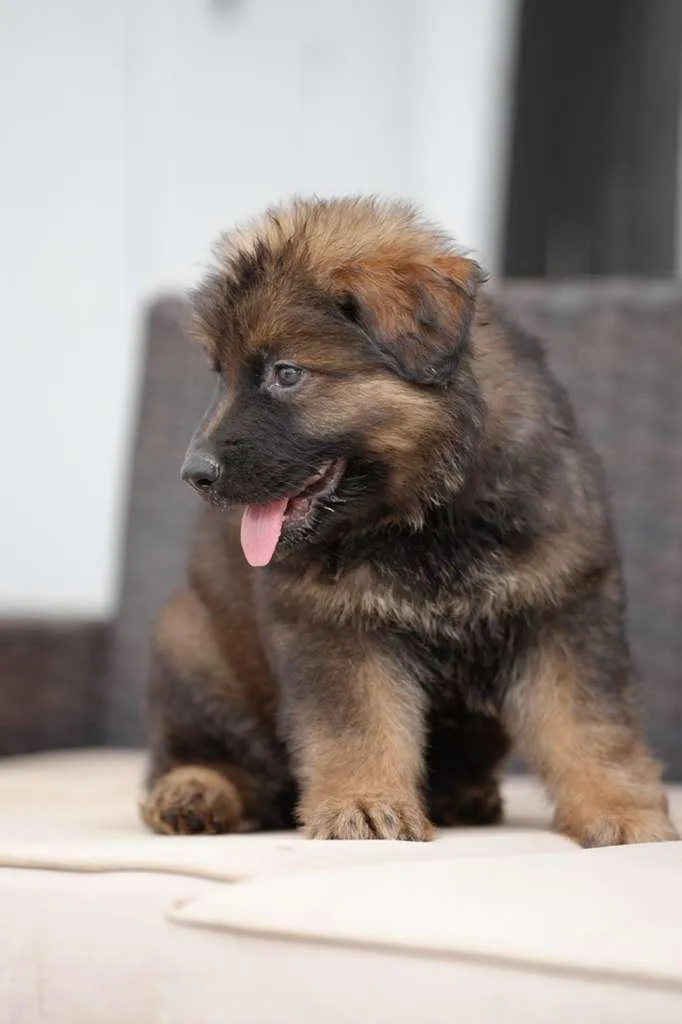
A Typical 8-Week-Old Puppy Routine
A young puppy’s day may look something like this:
Wake up.
Go outside to eliminate.
Eat.
Play or train briefly.
Go outside again.
Sleep.
Wake up.
Bathroom break.
Short socialization experience.
Sleep.
Wake up.
Eat.
Play.
Bathroom break.
Sleep again.
This cycle can repeat throughout the day.
A structured puppy sleep schedule does not require forcing the puppy to sleep at exact times. Instead, owners should create predictable opportunities for rest.
Stage 3: 3 to 4 Months — Longer Awake Periods Begin
Around three to four months, many German Shepherd puppies begin remaining awake for longer stretches.
They are more coordinated, curious, and capable of participating in training and household activities.
However, they still need a significant amount of sleep.
This is also an age when owners sometimes accidentally keep the puppy awake too long.
The puppy may appear energetic, so the family continues playing.
Then something strange happens.
The puppy becomes increasingly wild.
It starts running around the house.
Biting becomes harder.
Listening becomes more difficult.
The puppy grabs clothing, attacks the leash, jumps constantly, and seems unable to calm down.
Owners often assume the puppy needs more exercise.
Sometimes the opposite is true.
The puppy may need sleep.
Overtired Puppies Can Look Hyperactive
One of the most important lessons in understanding German Shepherd puppy sleep is recognizing overtired behavior.
A tired puppy does not always quietly walk to a bed and fall asleep.
Some puppies become more active when exhausted.
Possible signs include:
- Sudden zoomies
- Excessive biting
- Difficulty listening
- Frantic play
- Barking for no obvious reason
- Grabbing clothing
- Increased frustration
- Difficulty settling
- Repeatedly switching between toys
- Irritability
Owners may respond by adding another walk or more intense play.
That can sometimes make the situation worse.
If your puppy has been awake and active for a while and suddenly becomes chaotic, try giving the puppy a calm opportunity to rest.
Stage 4: 4 to 6 Months — Activity Increases but Sleep Still Matters
Between four and six months, the German Shepherd puppy is changing rapidly.
The puppy is larger.
Training sessions may become longer.
Walks and environmental exposure gradually increase.
The puppy may also be experiencing teething, which can affect comfort and behavior.
Even though the puppy looks increasingly capable, sleep remains essential.
A healthy German Shepherd puppy sleep schedule should balance:
- Training
- Socialization
- Play
- Meals
- Bathroom breaks
- Safe chewing
- Exploration
- Quiet time
- Daytime naps
- Overnight sleep
More activity does not automatically mean better development.
Young German Shepherds need stimulation, but they also need time to recover from stimulation.
Stage 5: 6 to 9 Months — Adolescent Puppies Still Need Naps
At six to nine months, owners sometimes stop thinking of their German Shepherd as a puppy.
Physically, the dog may already look impressive.
Emotionally and mentally, however, development is far from complete.
Adolescent German Shepherds can still benefit from regular daytime rest.
Their sleep may become more consolidated than it was at eight weeks, but many still nap after training, walks, play sessions, or stimulating experiences.
This stage can also include changing behavior.
Adolescent dogs may become more alert, independent, energetic, or sensitive to the environment.
Adequate rest can help prevent fatigue from making normal adolescent behavior more difficult.
If your puppy is also becoming more cautious or reactive during adolescence, our article on German Shepherd puppy fear periods and dog anxiety explains how developmental changes can affect confidence and behavior.
Stage 6: 9 to 12 Months — Moving Toward an Adult Routine
Between nine and twelve months, German Shepherd puppy sleep begins to resemble an adult pattern more closely.
The dog may stay awake for much longer periods.
Daytime naps are still normal.
Overnight sleep may become more consistent.
However, one-year-old German Shepherds are still young dogs.
Physical and behavioral maturity continues beyond the first birthday.
Owners should avoid using the dog’s size as the only measure of maturity.
A large adolescent German Shepherd may still need considerably more recovery than a mature adult.
Stage 7: After 12 Months — Transitioning Toward Adult Sleep
After the first birthday, sleep needs gradually move toward the dog’s adult pattern.
Adult dogs still sleep much more than humans often expect.
They commonly nap throughout the day, particularly when the household is quiet.
A mature German Shepherd may sleep overnight, rest during periods when the family is busy, and nap after physical activity.
The major difference is that adult dogs generally tolerate longer periods of activity without requiring the frequent naps seen in young puppies.
How Much Do Puppies Sleep at Night?
When owners ask how much do puppies sleep, they often mean overnight sleep.
Young puppies usually cannot sleep uninterrupted for the entire night when they first arrive home.
Their bladders are small.
Some may need nighttime bathroom breaks.
Others wake because the new environment is unfamiliar.
An eight-week-old puppy should not automatically be expected to sleep eight uninterrupted hours immediately.
Over time, nighttime sleep usually becomes longer and more consistent.
A useful nighttime routine may include:
A calm evening period.
A final bathroom trip.
A predictable sleeping location.
Minimal excitement during nighttime bathroom breaks.
Returning the puppy to bed promptly afterward.
Keeping nighttime trips boring helps teach the puppy that nighttime is for sleeping rather than playing.
Creating a Healthy Puppy Sleep Schedule
A puppy sleep schedule does not need to operate like a strict school timetable.
Instead, build predictable patterns around activity and rest.
A useful rhythm is:
Wake → Bathroom → Activity → Bathroom → Sleep
The activity might include a meal, short training session, gentle play, socialization experience, grooming practice, or exploration.
Then allow the puppy to rest.
This pattern helps prevent owners from accidentally keeping a puppy stimulated all day.
Sample Morning Puppy Sleep Schedule
A morning might look like:
7:00 AM: Wake and bathroom trip
7:15 AM: Breakfast
7:30 AM: Short play or training
7:45 AM: Bathroom trip
8:00 AM: Nap
10:00 AM: Wake and bathroom trip
10:15 AM: Short activity or socialization
10:45 AM: Nap
This is only an example.
Your puppy’s exact routine will depend on age, household schedule, feeding plan, and individual needs.
Should You Wake a Sleeping Puppy?
Usually, there is no reason to repeatedly wake a healthy puppy simply because it has been asleep for a while.
Rest is important.
However, daily routines still matter.
You may occasionally need to wake a puppy for practical reasons such as maintaining an appropriate feeding schedule, providing a bathroom opportunity, attending a veterinary appointment, or preventing the puppy from sleeping so late in the evening that nighttime sleep becomes disrupted.
The goal is balance.
Let healthy puppies sleep, but maintain enough structure that meals, bathroom needs, and nighttime routines remain manageable.
Puppy Sleeping a Lot: When Is It Normal?
Seeing a puppy sleeping a lot is usually normal when the puppy behaves normally while awake.
A healthy sleepy puppy generally:
- Wakes relatively easily
- Shows interest in food
- Drinks normally
- Plays enthusiastically
- Interacts with people
- Moves normally
- Uses the bathroom normally
- Responds to familiar sounds and activity
- Returns to normal energy after waking
That pattern is reassuring.
Sleep becomes more concerning when it is accompanied by other abnormal changes.
When Too Much Puppy Sleep May Be a Warning Sign
The number of hours alone does not usually determine whether something is wrong.
Look at the entire puppy.
Contact your veterinarian if increased sleeping occurs alongside signs such as:
- Difficulty waking
- Unusual weakness
- Refusing food
- Repeated vomiting
- Significant diarrhea
- Trouble breathing
- Pale gums
- Persistent coughing
- Fever
- Collapse
- Trembling
- Significant pain
- Major behavior changes
A puppy that normally runs toward food but suddenly will not get up deserves more attention than a puppy that sleeps eighteen hours but enthusiastically wakes for every meal.
Sudden change matters.
How Much Sleep Does a Puppy Need After Exercise?
There is no exact formula.
A short walk through an unfamiliar environment can sometimes be more mentally exhausting than longer play in a familiar yard.
Training also creates mental fatigue.
A puppy that has just completed a training session, met new people, ridden in a car, visited a new location, or explored a busy environment may sleep deeply afterward.
That does not necessarily mean the activity was excessive.
The puppy is processing a large amount of information.
However, if your puppy repeatedly appears exhausted, sore, reluctant to move, or unable to recover after routine activity, discuss the exercise program with your veterinarian.
Sleep and German Shepherd Puppy Training
Adequate sleep can directly affect training quality.
An overtired puppy may struggle to concentrate.
Commands the puppy performed perfectly yesterday may suddenly seem impossible.
The puppy may bite the leash, ignore food, become frustrated, or disengage.
Instead of assuming the puppy is stubborn, consider fatigue.
Short training sessions followed by rest are often more productive than one long session.
If you are building your puppy’s early skills, our German Shepherd puppy training guide explains how consistency and age-appropriate training support development.
Sleep and Puppy Socialization
Socialization is important, but puppies do not need continuous exposure all day.
A useful socialization session may last only a few minutes.
A puppy might calmly observe traffic, meet one appropriate new person, walk across a different surface, hear a new household sound, and then go home to sleep.
That can be more valuable than several hours of overwhelming stimulation.
Sleep gives the puppy time to recover between experiences.
Good development is not about exposing the puppy to the maximum number of things.
It is about providing manageable experiences the puppy can process successfully.
Where Should a German Shepherd Puppy Sleep?
The ideal sleeping location should be safe, comfortable, and relatively quiet.
Some owners use a crate.
Others use a puppy pen or another secure sleeping area.
Whatever method you choose, the puppy should have a location where it can rest without constantly being disturbed.
Young puppies are curious.
If they are left in an open room filled with activity, they may repeatedly wake to follow people even when exhausted.
A quiet sleeping area can help them settle.
The area should not become a punishment space.
The goal is to create a positive association with rest.
Is Crate Sleep Good for German Shepherd Puppies?
A crate can be useful when introduced correctly.
It can provide a consistent sleeping area, support household management, and help some puppies settle when they would otherwise continue following family activity.
However, crate training should be gradual and positive.
A puppy should not spend most of its waking and sleeping life confined simply because puppies require a lot of sleep.
Puppies still need interaction, exercise, training, socialization, bathroom opportunities, and free movement in safe environments.
The crate is one management tool, not a replacement for normal puppy life.
Why Does My Puppy Wake Up So Easily?
Young puppies may sleep deeply, but they can also wake quickly when something interesting happens.
A refrigerator opens.
Someone walks through the room.
Another dog moves.
A child begins playing.
The puppy immediately wakes because it does not want to miss anything.
This is another reason a quiet sleeping area can help.
If the puppy constantly sleeps in the busiest part of the house, naps may repeatedly be interrupted.
Why Does My Puppy Fight Sleep?
Some puppies resist settling even when exhausted.
They continue finding things to chew, follow family members, initiate play, or become increasingly mouthy.
This is common in highly engaged puppies.
Owners can help by lowering stimulation.
Dim the environment if appropriate.
Put exciting toys away.
Provide a safe resting space.
Reduce interaction.
Use a predictable routine.
A puppy cannot always make the best decision about when it needs rest.
Sometimes the owner needs to create the conditions that make sleeping easier.
Does Teething Affect Puppy Sleep?
It can.
During puppy teething, gums may be uncomfortable and puppies may become more restless or chew more frequently.
Some puppies may sleep normally while others temporarily have more difficulty settling.
Appropriate chew options and a predictable routine can help.
Owners interested in this stage can also review our dog dental care and German Shepherd puppy teething guide for the puppy-to-adult tooth timeline and oral care recommendations.
Does a Growth Spurt Make Puppies Sleep More?
Owners sometimes notice periods when a puppy appears to sleep more while growing rapidly.
The body of a German Shepherd puppy changes dramatically during the first year.
Temporary variations in sleep can occur alongside growth, changing activity, new experiences, or developmental stages.
Instead of trying to determine whether every extra nap is caused specifically by a growth spurt, evaluate the puppy’s overall health and behavior.
If the puppy wakes normally and remains active and interested in life, additional rest may simply reflect changing needs.
Should Puppies Sleep After Eating?
It is common for puppies to become sleepy after eating.
A typical routine often includes eating, a bathroom opportunity, a short period of calm activity, and then rest.
For German Shepherds and other large breeds, owners should avoid encouraging intense activity immediately around meals.
Keeping the period after eating relatively calm can fit naturally into a healthy German Shepherd puppy sleep schedule.
Can Puppies Sleep Too Little?
Yes.
Owners often worry about excessive sleep but overlook insufficient sleep.
A puppy living in a very busy household may struggle to rest.
Children may repeatedly wake the puppy.
Visitors may constantly interact with it.
The puppy may follow people around the home all day.
Too little sleep can contribute to:
- Irritability
- Excessive biting
- Poor concentration
- Hyperactivity
- Difficulty settling
- Frustration
- Reduced training performance
If your puppy seems increasingly chaotic as the day progresses, consider whether the dog is actually getting enough uninterrupted rest.
Sleep Needs Are Individual
Two German Shepherd puppies of the same age may not follow identical sleep patterns.
One may nap deeply after twenty minutes of activity.
Another may remain awake longer.
Temperament, environment, activity level, household routine, and individual development all influence sleep.
That is why how much do puppies sleep cannot be answered with one perfect number.
Ranges are helpful.
The puppy in front of you matters more.
How to Know Your Puppy Is Getting Enough Sleep
Instead of counting every minute, evaluate the results.
A well-rested puppy usually has periods of healthy energy followed by an ability to settle.
The puppy should be capable of focusing briefly during training.
It should recover after stimulation.
It should wake with normal interest in food, people, toys, and the environment.
If your puppy is constantly frantic, unable to settle, increasingly mouthy, and easily frustrated, additional structured rest may help.
Sleep Changes During German Shepherd Adolescence
As your German Shepherd enters adolescence, sleep patterns can change.
The dog may become more active and stay awake for longer stretches.
At the same time, adolescence can bring behavioral changes.
Training may temporarily feel less consistent.
Environmental awareness may increase.
The dog may seem more independent.
Maintaining adequate sleep during this period can help keep fatigue from adding another challenge.
Do not assume that a nine-month-old German Shepherd no longer needs daytime naps simply because the dog looks nearly adult.
Building a Healthy German Shepherd Puppy Routine
Sleep works best when it is part of a balanced day.
A healthy routine should include:
- Appropriate meals
- Regular bathroom opportunities
- Age-appropriate physical activity
- Short training sessions
- Safe socialization
- Mental enrichment
- Chewing opportunities
- Family interaction
- Quiet independent time
- Plenty of sleep
No single part should dominate the puppy’s entire day.
German Shepherd puppies need activity and engagement, but constant stimulation is not the goal.
Preparing for a German Shepherd Puppy
Understanding sleep needs before bringing a puppy home can make the first weeks easier.
Families often prepare food, bowls, toys, collars, and beds but forget to plan where the puppy will actually rest during the day.
Choose the sleeping area before the puppy arrives.
Decide how nighttime bathroom trips will work.
Create household rules about waking the puppy.
Make sure children understand that a sleeping puppy needs rest.
Families preparing for a new German Shepherd can explore our German Shepherd puppy FAQ for additional information about preparation, training, feeding, socialization, and everyday puppy care.
Families currently choosing a puppy can also view our Available German Shepherd Puppies and compare current puppy profiles and availability.
Frequently Asked Questions About German Shepherd Puppy Sleep
How Much Do Puppies Sleep Each Day?
Young puppies may sleep approximately 18 to 20 hours during a 24-hour period, particularly during the earliest months.
Sleep gradually decreases and becomes more consolidated as puppies mature.
Individual needs vary, so evaluate both the amount of sleep and how the puppy behaves while awake.
How Much Sleep Does an 8-Week-Old Puppy Need?
An eight-week-old puppy may spend most of the day sleeping between meals, bathroom trips, play, and brief socialization experiences.
Frequent naps are completely normal at this age.
Is It Normal for My German Shepherd Puppy to Sleep All Day?
Frequent sleep is normal, particularly in young puppies.
However, the puppy should wake normally, eat, play, move comfortably, and interact appropriately.
A sudden major increase in sleep combined with weakness or other symptoms deserves veterinary attention.
Why Is My Puppy Sleeping a Lot?
A puppy sleeping a lot may simply be growing and recovering from normal daily experiences.
Training, play, socialization, growth, and environmental stimulation can all increase the need for rest.
Look at the puppy’s behavior when awake rather than judging sleep alone.
Should My Puppy Have Scheduled Naps?
Scheduled or structured nap opportunities can be very helpful.
They are especially useful for puppies that do not settle naturally or live in busy households.
You do not need to force exact nap times, but maintaining a predictable puppy sleep schedule can prevent overtired behavior.
How Long Should a Puppy Stay Awake Between Naps?
There is no universal rule.
Very young puppies may become tired after relatively short periods of activity.
Older puppies can remain awake much longer.
Watch the individual puppy for signs such as increasing mouthiness, frantic behavior, poor concentration, or difficulty settling.
Why Does My Puppy Get Crazy Before Bed?
The puppy may be overtired.
Zoomies, biting, barking, grabbing clothing, and difficulty listening can sometimes occur when a puppy needs rest.
Try reducing stimulation and providing a calm opportunity to sleep.
Should I Wake My Puppy to Pee?
Very young puppies may need planned nighttime bathroom opportunities because they cannot always hold their bladder for an entire night.
As the puppy matures, the time between bathroom trips usually increases.
Why Does My Puppy Sleep After Training?
Training requires mental effort.
Even a short session can be tiring for a young German Shepherd.
Sleeping afterward can be a normal part of processing and recovering from the experience.
When Should I Worry About Puppy Sleep?
Contact a veterinarian when increased sleep occurs with unusual weakness, difficulty waking, refusal to eat, vomiting, diarrhea, breathing problems, significant pain, pale gums, collapse, or another major change from the puppy’s normal behavior.
Final Thoughts: How Much Do Puppies Sleep?
So, how much do puppies sleep?
For very young German Shepherd puppies, the answer can be most of the day.
Some puppies may sleep around 18 to 20 hours during a 24-hour period in the earliest months, with sleep gradually decreasing and becoming more consolidated as they grow.
The exact number is less important than the overall pattern.
A healthy puppy should cycle naturally between sleep and periods of normal activity.
When awake, the puppy should generally show interest in food, play, people, training, and the environment.
A healthy German Shepherd puppy sleep routine should include plenty of daytime naps, predictable nighttime rest, appropriate activity, and quiet recovery after stimulating experiences.
Do not mistake an overtired puppy for a puppy that simply needs more exercise.
Sometimes the biting, zoomies, frustration, and inability to listen are signs that the puppy needs less stimulation and more sleep.
At the same time, trust changes in your individual puppy.
If a puppy that normally wakes enthusiastically suddenly becomes difficult to wake, refuses food, appears weak, or develops other abnormal symptoms, contact your veterinarian.
Understanding puppy sleep by age helps owners set realistic expectations.
A good German Shepherd puppy sleep schedule is not about forcing an exact number of hours.
It is about giving a growing puppy enough activity to develop confidently and enough rest to recover, learn, grow, and become a healthy adult German Shepherd.
For another practical reference on normal puppy sleep, see the American Kennel Club guide on how much puppies sleep.