

Understanding how German Shepherds show love is easier when you look at repeated behaviors such as proximity, check-ins, responsiveness, contact, and shared activity. German Shepherds often show attachment through behavior rather than dramatic displays. Following a person from room to room, checking in during walks, leaning nearby, bringing a toy, responding closely to cues, or simply choosing to rest near the family can all be signs of a strong social bond.
How German Shepherds Show Love: Common Attachment Behaviors
Attachment is easiest to recognize by watching patterns of behavior. A German Shepherd that repeatedly chooses proximity, checks in with a person, responds closely to cues, seeks contact, or brings toys may be showing a strong social bond in its own way.
What Owners Should Evaluate
- Temperament and energy level.
- Health history and current condition.
- Training and socialization needs.
- Family schedule and living environment.
- Breeder support and long-term expectations.
What This Means for Owners and Families
The right answer depends on the individual dog and the life you actually live. Consider work hours, children, other pets, exercise habits, training experience, travel, grooming tolerance, and how much daily structure you are prepared to provide.
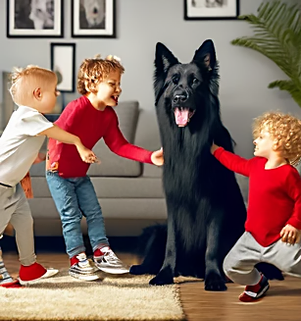
Why Individual Dogs Still Vary
Puppy behavior is not adult behavior. A young German Shepherd may be mouthy, impulsive, easily distracted, and physically uncoordinated even if the dog will mature into a steady companion. Adolescence can bring another increase in independence and environmental interest. Owners should evaluate the topic with the dog’s developmental stage in mind.
Individual temperament matters just as much. Two German Shepherds raised in the same home can differ in sensitivity, sociability, persistence, prey drive, food motivation, and ability to settle. Breed tendencies are useful, but they should not be used to predict every dog with absolute certainty.
Family Lifestyle Questions to Ask Yourself
- How many hours will the dog normally spend alone?
- Who will provide daily exercise and training?
- Are there young children, older adults, cats, or other dogs in the home?
- How much shedding, grooming, and household management are you comfortable with?
- Do you want a relaxed companion, an active hiking partner, a sport prospect, or a dog with another specific role?
- Are you prepared for adolescence, not just the puppy stage?
A Stable German Shepherd Still Needs Structure
Good genetics do not remove the need for training. House rules, leash skills, recall, calm greetings, handling, crate comfort, and a reliable settle make family life much easier. The goal is not constant obedience; it is clear communication and predictable routines.
For another perspective on temperament, exercise, training, and family fit, see the AKC guide to whether a German Shepherd fits your lifestyle.

What Good Ownership Looks Like Over the Long Term
German Shepherd ownership includes routine veterinary care, preventive health, appropriate exercise, dental and coat care, training refreshers, and adjusting activity as the dog ages. Owners who plan for the whole lifespan are less likely to be surprised when the dog’s needs change.
Understanding how German Shepherds show love is most useful when it helps you choose and raise the individual dog well. A good breeder can provide context about the parents and puppy, but the family’s daily decisions shape how that potential develops.
Putting This Information in Context
One of the easiest mistakes with how German Shepherds show love is to treat one characteristic as if it explains the entire dog. German Shepherds are the result of genetics, early raising, training, health, environment, and daily management. A useful article should help you make a better decision without pretending that every dog will follow the same script.
The German Shepherd Dog Club of America breed standard is a useful outside reference for the breed’s intended character and overall qualities. Breed standards and educational resources are most helpful when they are combined with information about the actual sire, dam, puppy, and household.
What to Verify Before You Decide
- The registered identity and background of the sire and dam when pedigree information is relevant.
- Available health information that can be tied to the correct dogs.
- The breeder’s explanation of temperament, structure, and why the pairing was made.
- The individual puppy’s age, behavior, social development, and current routine.
- The written terms covering records, health protection, pickup or delivery, and breeder support.
Why the Individual Puppy Still Matters
Even when how German Shepherds show love is the reason a family begins researching, the final decision should be about the individual puppy. Littermates can vary in confidence, independence, energy, sensitivity, food motivation, play style, and ability to settle. A breeder who has spent time with the litter can often provide information that a photo cannot.
Families should also be realistic about their own routine. The best match for a busy household with children may be different from the best match for an experienced handler who wants intensive training or sport. Matching is strongest when both the breeder and the buyer are specific about what the dog will be expected to do every day.
Related reading: The Family-Friendly Nature of German Shepherds.