
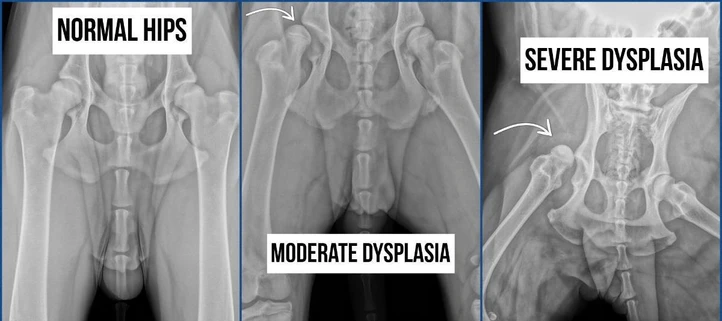
Hip dysplasia in German Shepherds has a genetic component, but growth, body weight, joint structure, nutrition, and other environmental factors also influence orthopedic health. Hip dysplasia is influenced by genetics, but genes are not the only factor involved in how a dog’s hips develop or how clinical signs appear. Growth rate, body weight, nutrition, exercise, joint conformation, and other environmental influences can also affect orthopedic health.
Hip Dysplasia Is Influenced by More Than One Factor
Canine hip dysplasia involves abnormal development and fit of the hip joint. Genetics matter, but growth rate, body weight, conditioning, surface traction, repetitive impact, and other environmental factors can influence how clinical problems develop. That is why responsible breeding and responsible raising both matter.
The OFA CHIC program helps owners understand the idea of breed-specific health screening. Screening does not guarantee that every puppy will be free of orthopedic disease, but it gives breeders and buyers more information than breeding without documented evaluation.
What Owners Can Control During Growth
- Keep a growing puppy lean rather than over-conditioned.
- Use age-appropriate exercise and avoid repetitive high-impact jumping during rapid growth.
- Provide secure footing where possible so the puppy is not constantly slipping.
- Feed a complete diet appropriate for growth and discuss body condition with your veterinarian.
- Report limping, stiffness, reluctance to rise, or persistent gait changes to a veterinarian rather than trying to diagnose from a photo.
Questions to Ask a Breeder About Hips
Ask what orthopedic information is available for the sire and dam, how the breeder evaluates structure and movement, and what the contract or health guarantee says about orthopedic conditions. Strong answers should be specific rather than relying on ‘we have never had a problem.’
A Practical Approach for Owners
Use breed information as education, not as a substitute for an examination. If a dog is in pain, losing weight, vomiting, having persistent diarrhea, limping, struggling to breathe, or showing another significant change, contact a veterinarian. Online guides are most useful for helping owners ask better questions and understand preventive care.
What to Monitor Over Time
Owners get better information from trends than from one isolated observation. Keep simple notes when something changes: appetite, weight, stool, mobility, coat condition, energy, sleep, water intake, or behavior. Photos and videos can be useful for showing a veterinarian how a gait or skin condition has changed, but they should support an examination rather than replace one.
German Shepherds are athletic dogs, and normal activity can make minor changes easy to dismiss. Persistent limping, repeated digestive upset, unexplained weight loss, marked lethargy, pain, or a sudden behavior change deserves professional attention. Early evaluation is often simpler than waiting until the dog is significantly uncomfortable.
Prevention Is Usually a Routine, Not One Product
- Maintain a healthy body condition.
- Use age-appropriate exercise and conditioning.
- Keep preventive veterinary appointments and vaccinations appropriate for the dog’s lifestyle.
- Stay consistent with parasite prevention based on veterinary guidance and regional risk.
- Provide routine dental, nail, ear, skin, and coat care.
- Use a complete diet and make major nutrition changes deliberately.
Why Genetics and Environment Both Matter
Health discussions are often oversimplified into ‘genetic’ versus ‘environmental.’ In reality, many conditions involve both inherited risk and environmental influence. Responsible breeding can reduce some risks by selecting from documented information, while responsible ownership can reduce avoidable stress on growth, weight, joints, skin, digestion, and overall fitness.
For readers researching hip dysplasia in German Shepherds, this outside reference adds independent context. For independent orthopedic-health information, the Orthopedic Foundation for Animals hip dysplasia resource explains canine hip dysplasia and how OFA hip screening is evaluated.
No breeder or owner can eliminate every possible illness. The more realistic goal is risk reduction, early recognition, transparent records, and a plan for care when something does occur.
Questions to Bring to Your Veterinarian
- Is what I am seeing consistent with normal variation in hip dysplasia in German Shepherds?
- Does my dog’s body condition or growth rate need adjustment?
- Are there tests or imaging that would clarify the concern?
- Should exercise, diet, supplements, or medication change?
- What signs would mean I should return sooner or seek urgent care?
Putting This Information in Context
One of the easiest mistakes with hip dysplasia in German Shepherds is to treat one characteristic as if it explains the entire dog. German Shepherds are the result of genetics, early raising, training, health, environment, and daily management. A useful article should help you make a better decision without pretending that every dog will follow the same script.
The AKC German Shepherd breed overview is a useful outside reference for the breed’s intended character and overall qualities. Breed standards and educational resources are most helpful when they are combined with information about the actual sire, dam, puppy, and household.
What to Verify Before You Decide
- The registered identity and background of the sire and dam when pedigree information is relevant.
- Available health information that can be tied to the correct dogs.
- The breeder’s explanation of temperament, structure, and why the pairing was made.
- The individual puppy’s age, behavior, social development, and current routine.
- The written terms covering records, health protection, pickup or delivery, and breeder support.
Why the Individual Puppy Still Matters
Even when hip dysplasia in German Shepherds is the reason a family begins researching, the final decision should be about the individual puppy. Littermates can vary in confidence, independence, energy, sensitivity, food motivation, play style, and ability to settle. A breeder who has spent time with the litter can often provide information that a photo cannot.
Families should also be realistic about their own routine. The best match for a busy household with children may be different from the best match for an experienced handler who wants intensive training or sport. Matching is strongest when both the breeder and the buyer are specific about what the dog will be expected to do every day.
Related reading: German Shepherd Health Testing: Why Hip and Elbow Certifications Matter.