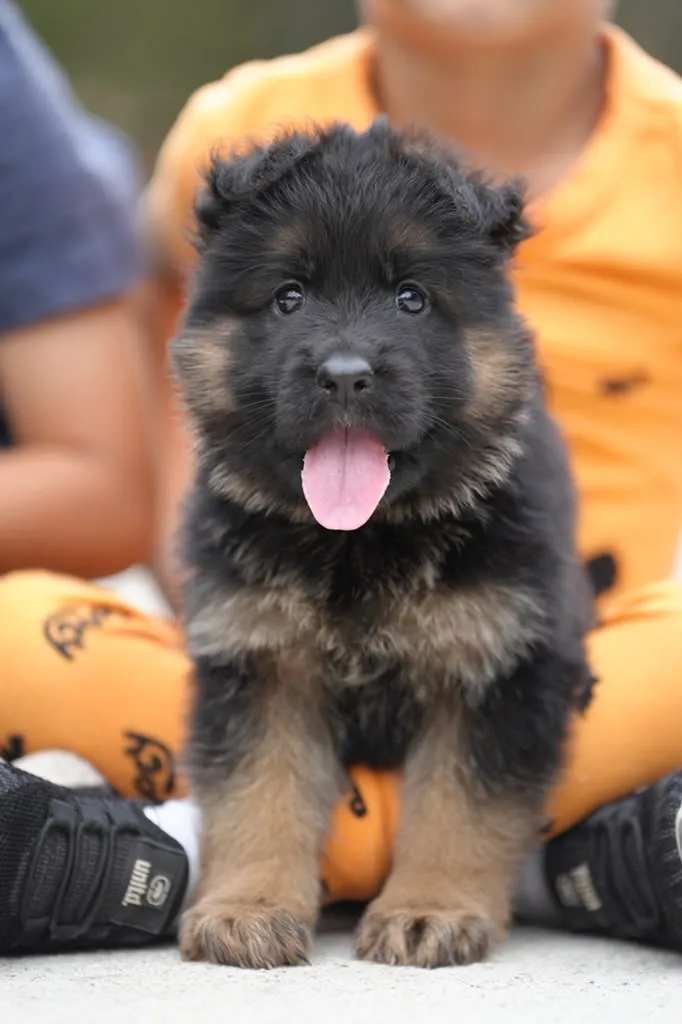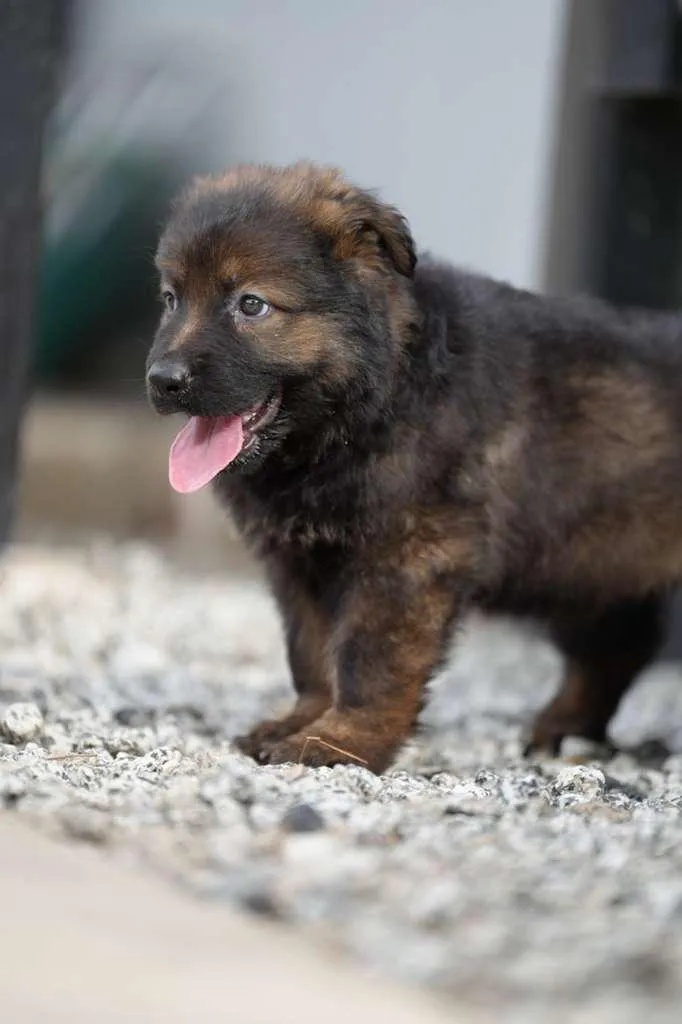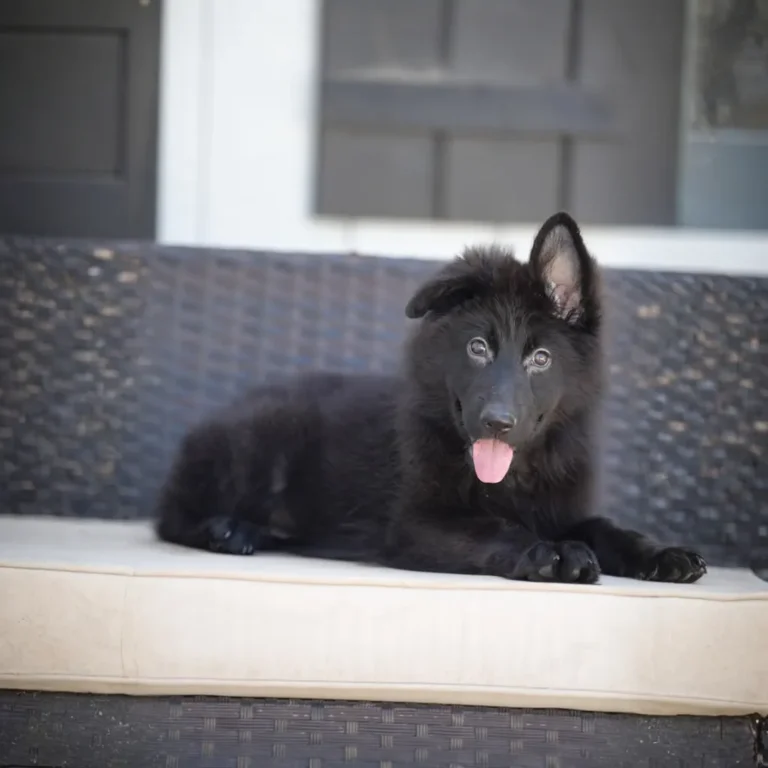
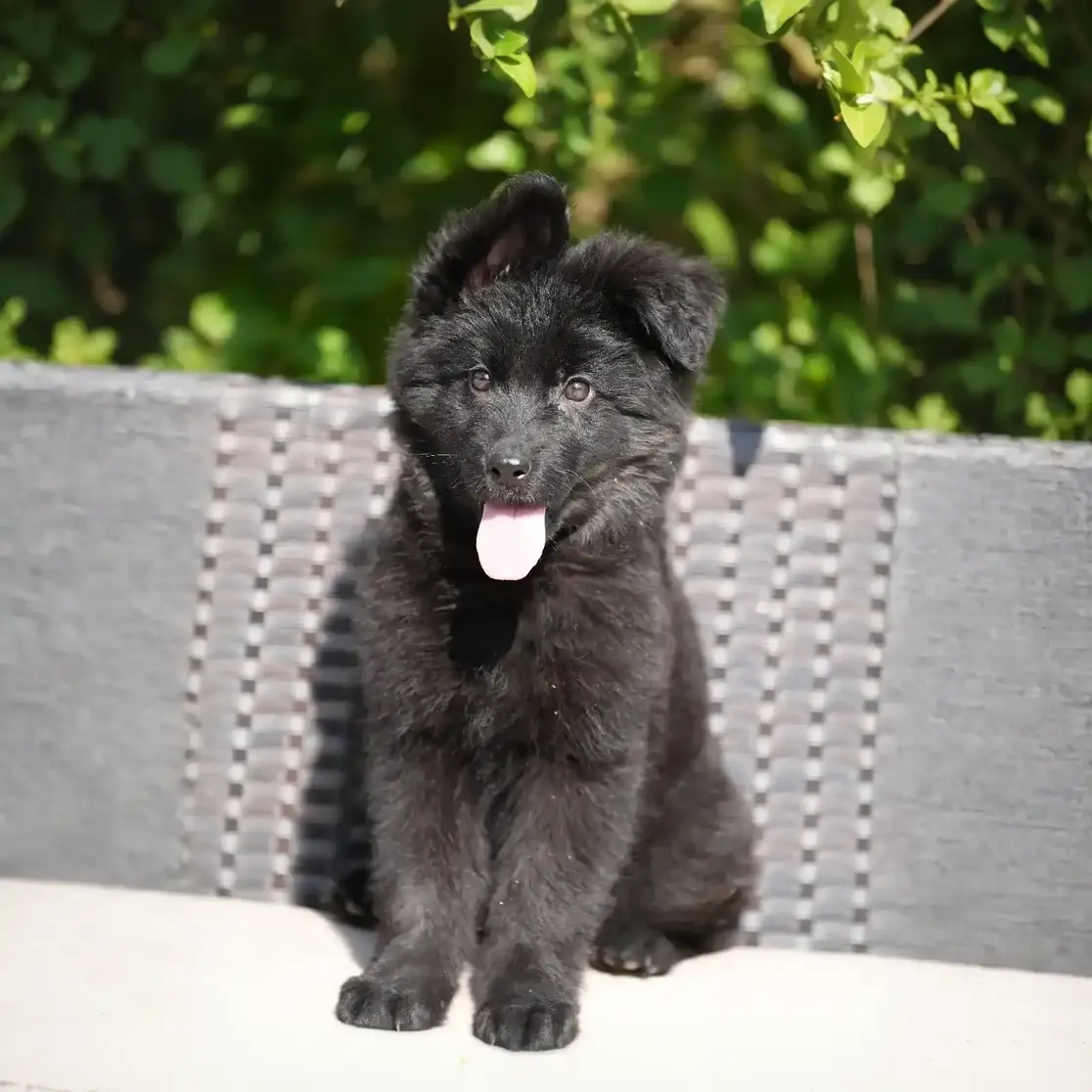
Successful service dog training begins long before formal task work.
It begins with selecting a puppy whose temperament, physical development, resilience, and relationship with people give that dog a reasonable chance of succeeding in a demanding working role.
That distinction matters.
A German Shepherd puppy can be intelligent, beautiful, affectionate, confident, and still be a poor candidate for future service work.
Likewise, the puppy that looks the boldest or most impressive in the litter is not automatically the best prospect.
Service work asks for something more specific: a dog that can learn, recover from stress, remain neutral around distractions, work closely with a handler, settle when nothing is happening, and continue functioning in unfamiliar environments.
No puppy test can guarantee the adult dog.
The goal is to improve the odds by evaluating the right things.
Start With the Job, Not the Puppy
Before evaluating a litter, define what the future dog may actually need to do.
“Service dog” is a broad description.
Different handlers may eventually need very different forms of trained assistance.
One dog may need to work quietly for long periods in public.
Another may need strong retrieval behavior.
Another may need to notice specific changes in the handler and perform trained responses.
Another may need enough size and physical stability for certain appropriate assistance tasks.
Those differences matter when selecting a puppy.
The best question is not:
Which puppy is the smartest?
It is:
Which puppy has the best foundation for the work, environment, and handler this dog may eventually have?
A puppy selected only because it is outgoing, highly driven, or extremely attached to people may later struggle if those same qualities become overexcitement, environmental sensitivity, or difficulty settling.
Begin with the adult job.
Then evaluate the puppy.
The Prospect Profile: What You Are Really Looking For
A future service dog prospect does not need to be perfect.
But several traits deserve much more attention than appearance.
Think of the ideal prospect as having a balanced profile rather than one extreme strength.
You are looking for a puppy that can notice the world without being overwhelmed by it.
A puppy that wants to interact with people without needing constant attention.
A puppy that is curious without being reckless.
A puppy that can become excited and then settle again.
A puppy that can encounter something surprising and return to normal.
A puppy that enjoys learning without becoming frantic.
That balance is often more useful than extreme boldness or extreme drive.
Trait 1: Recovery Matters More Than Never Being Startled
A service dog prospect does not need to ignore every unfamiliar sound or object.
Puppies are allowed to notice things.
They may hesitate.
They may startle.
What matters is what happens next.
Does the puppy recover?
Does curiosity return?
Can the puppy re-engage with a person?
Can the puppy continue exploring?
A puppy that briefly startles and then returns to normal may show more useful resilience than a puppy that appears fearless during one short observation.
For future service dog training, recovery is important because real life cannot be completely controlled.
Doors slam.
Carts move.
People drop objects.
Children make noise.
Elevators behave differently from normal floors.
Medical equipment, traffic, crowds, unfamiliar surfaces, and unexpected movement can all become part of the dog’s environment.
The dog does not need to love every surprise.
The dog needs the ability to recover and continue functioning.
Trait 2: Look for Environmental Confidence Without Environmental Obsession
Confidence is valuable.
But confidence alone is not enough.
Consider two puppies entering a new room.
The first puppy freezes and cannot engage with anything else.
The second puppy explores every corner so intensely that the handler becomes irrelevant.
Neither response is ideal for many forms of service work.
A stronger prospect may notice the environment, investigate appropriately, and still remain available to interact with a person.
That balance becomes important later.
A working dog needs enough environmental confidence to move through new places without constantly needing reassurance.
But the environment should not be more important than the handler.
Trait 3: Human Engagement Should Feel Natural
Future service dogs work in partnership with people.
That does not mean selecting the puppy that climbs into everyone’s lap first.
Instead, observe how easily the puppy engages with humans.
Does the puppy notice a person?
Approach willingly?
Follow movement?
Respond to encouragement?
Return after exploring?
Accept gentle handling?
Re-engage after distraction?
You are looking for social connection that can become a foundation for training.
A puppy that is completely independent may require much more effort to maintain engagement.
At the other extreme, a puppy that cannot function unless physically attached to a person may also struggle with confidence and independence.
The ideal relationship is often somewhere in the middle:
interested, connected, responsive, but still emotionally functional.
Trait 4: Trainability Is More Than Intelligence
German Shepherds have a reputation for intelligence.
But intelligence and trainability are not identical.
An intelligent dog can still be difficult to train for a particular job.
For service dog training, useful trainability includes several qualities working together:
Motivation.
Persistence.
Handler engagement.
Ability to repeat behaviors.
Tolerance for frustration.
Ability to disengage from distractions.
Willingness to try again after making a mistake.
A puppy that solves a problem quickly once is interesting.
A puppy that wants to keep working with the person may tell you more.
Watch how the puppy responds when access to something desirable requires interaction or problem-solving.
The goal is not to identify a tiny obedience champion at eight weeks old.
It is to look for a puppy that appears to enjoy participating with people.
Trait 5: The Ability to Settle Is a Working Trait
High drive often receives attention in German Shepherds.
For many working roles, drive can be useful.
But service work is unusual because the dog may spend significant amounts of time doing very little.
Waiting in an office.
Lying under a table.
Sitting through an appointment.
Riding in a vehicle.
Remaining quiet while the handler speaks with someone.
Moving calmly through a store.
A dog that can work intensely but cannot settle may make daily service life extremely difficult.
When evaluating a puppy, do not watch only the exciting moments.
Watch what happens afterward.
After play, can the puppy begin to relax?
After exploring, can the puppy disengage?
When nothing interesting is happening, does the puppy constantly create its own stimulation?
The ability to transition from activity to rest is worth noticing early.
Trait 6: Neutrality Is Often More Valuable Than Extreme Friendliness
Many buyers assume a future service dog should love every person and dog.
That is not necessarily the goal.
The dog may need to remain comfortable around people and animals without trying to interact with all of them.
That is neutrality.
A puppy that becomes intensely excited whenever another dog appears may eventually require substantial work around dog distractions.
A puppy that tries to greet every stranger may struggle to ignore people in public.
At the other extreme, fear, suspicion, avoidance, or inappropriate defensive behavior can also create serious difficulties.
The useful middle ground is social stability.
The puppy can notice another person or dog without losing the ability to respond to the handler.
That is a much more practical foundation.
Trait 7: Watch Frustration, Not Just Success
An easy puppy test can hide important information.
Sometimes the more useful observation comes when the puppy does not immediately get what it wants.
What happens when access is delayed?
When a simple barrier is introduced?
When food does not appear instantly?
When a toy becomes briefly unavailable?
Some frustration is normal.
What matters is how the puppy handles it.
Does the puppy think?
Try another strategy?
Look toward the person?
Recover?
Or does frustration rapidly turn into panic, avoidance, excessive vocalization, or inability to continue?
Future work requires repetition and occasional difficulty.
A service dog prospect benefits from being able to experience mild frustration without emotionally falling apart.
Trait 8: Physical Suitability Cannot Be Separated From Temperament
Temperament may be the most visible part of puppy selection, but physical health matters just as much.
The dog may eventually be expected to work for years.
That makes health history and structure relevant from the beginning.
Ask about the sire and dam.
Ask what health testing was completed.
Review the pedigree and family history where possible.
Ask about orthopedic health.
Ask about problems seen in related dogs.
Look at how the puppy moves.
Look for obvious discomfort, weakness, or abnormal movement that deserves veterinary evaluation.
A puppy’s parents having health testing does not guarantee the puppy will never develop disease.
The purpose is risk reduction.
The same principle applies to temperament.
A strong prospect is created by stacking favorable factors, not by finding a guarantee.
Our existing article on hip dysplasia in German Shepherds is especially relevant when considering long-term orthopedic risk in a breed expected to perform physical work.
Trait 9: The Family Behind the Puppy Matters
Do not evaluate the puppy in isolation.
The litter matters.
The parents matter.
The breeder matters.
The early environment matters.
Observe the dam when possible and appropriate.
Ask about her temperament outside the litter.
Ask about the sire.
Ask how previous puppies from related lines have developed.
Ask how the litter has been raised.
Ask what the puppies have experienced.
Ask which puppy the breeder believes best fits your goals—and why.
An experienced breeder who has watched the litter every day has information that a visitor observing the puppies for thirty minutes does not have.
That does not mean accepting every prediction as fact.
It means combining breeder observations with your own evaluation and, ideally, input from a trainer experienced in service-dog prospects.
Good puppy selection uses multiple sources of information.
Do Not Select by Color, Coat, or First Impression
Appearance can influence puppy choices more than buyers realize.
A particular coat.
A darker mask.
A larger puppy.
The puppy that sits perfectly for the first photo.
Those qualities may matter to a family aesthetically.
They do not establish suitability for service work.
Color does not tell you whether the puppy has the necessary recovery, stability, engagement, or ability to settle.
Our existing article on German Shepherd temperament and coat-color myths is useful here: evaluate the dog in front of you rather than attaching personality expectations to appearance.
For a future working prospect, temperament and functional suitability need to outrank cosmetic preference.
A Single Puppy Test Should Not Make the Decision
Temperament tests can provide useful observations.
But they should not be treated like an entrance examination where the puppy either passes or fails forever.
Puppies are developing rapidly.
Sleep, hunger, environment, previous activity, developmental stage, and unfamiliar people can all influence what you see during one short session.
That is why repeated observations are valuable.
Ask the breeder what the puppy is like:
In the morning.
During play.
Around unfamiliar objects.
When separated briefly from littermates.
When handled.
When tired.
After being startled.
When learning something new.
When another puppy takes a toy.
When people enter the room.
Patterns are more useful than one dramatic response.
The Three-Observation Method
Instead of one formal “test,” evaluate the puppy in three different states.
Observation One: Free Puppy
Do not immediately interact.
Watch.
Which puppy explores?
Which puppy constantly follows littermates?
Which puppy notices people?
Which puppy becomes overwhelmed?
Which puppy repeatedly initiates conflict?
Which puppy can occupy itself calmly?
You are seeing behavior before your presence changes it.
Observation Two: Puppy With a Person
Now interact.
Call the puppy.
Move around.
Offer simple play.
Use food if appropriate.
Handle the puppy gently.
Watch whether engagement develops naturally.
You are asking:
Does this puppy want to work with a human?
Observation Three: Puppy After Excitement
This part is frequently skipped.
After interaction or play, observe the puppy again.
Can it come down?
Can it settle?
Can it disengage?
The puppy’s “off switch” may ultimately matter as much as the puppy’s drive.
Green-Light Traits
No puppy needs to display every desirable trait perfectly.
But several observations together can make a prospect more interesting.
You may feel more encouraged by a puppy that regularly shows:
Stable interest in people.
Appropriate curiosity.
Reasonable confidence.
Quick recovery.
Ability to engage and re-engage.
Moderate persistence.
Food or toy motivation.
Ability to relax after activity.
Comfort with handling.
Environmental interest without fixation.
Appropriate social behavior around littermates.
None of these traits guarantees success.
They simply give the future service dog training process more favorable material to work with.
Yellow-Light Traits
Some behaviors deserve investigation rather than immediate rejection.
A puppy may be unusually tired during one visit.
A puppy may hesitate in a new room.
A puppy may temporarily avoid interaction.
A puppy may be going through a developmental change.
A puppy may simply have had an extremely active morning.
Do not make a major decision from one moment.
Ask the breeder whether the behavior is typical.
Observe again.
If possible, review current videos taken on different days.
The question is whether the behavior is temporary or part of a consistent pattern.
Red-Light Concerns for a Future Service Prospect
Some patterns deserve much more caution.
Persistent fear that does not resolve.
Strong environmental sensitivity.
Repeated inability to recover after mild stress.
Extreme suspicion of unfamiliar people.
Persistent inappropriate reactivity.
Severe difficulty disengaging from dogs or environmental movement.
Very low interest in human interaction.
Repeated inability to settle.
Significant health or orthopedic concerns.
Again, context matters.
A puppy should never be labeled from a single reaction.
But if repeated observations point toward a trait fundamentally incompatible with the planned work, choosing a different puppy may be wiser than assuming training will erase it.
Training develops behavior.
It does not magically replace temperament.
Evaluate the Parents as Part of the Selection
One of the easiest mistakes is focusing exclusively on the litter.
A puppy has only existed for a few weeks.
The parents give you another source of information.
When possible, learn about:
The parents’ everyday temperaments.
Environmental confidence.
Social behavior.
Trainability.
Health testing.
Working history.
Any recurring behavioral or health patterns in related dogs.
A responsible breeding program should consider more than producing attractive puppies.
Our article about responsible German Shepherd breeding explains why parent selection, health, temperament, and breeding decisions matter beyond appearance.
For a future service prospect, this information becomes even more valuable.
Tell the Breeder the Real Goal
Do not simply tell the breeder:
“I want the best puppy.”
That phrase has almost no useful meaning.
Tell them what the adult dog’s life may actually involve.
Explain that you are considering service dog training.
Describe the type of environments the dog may encounter.
Discuss the level of public access expected.
Explain whether the dog will need strong retrieval tendencies, sustained handler focus, quiet settling, or other relevant abilities.
Describe your household.
Children.
Other dogs.
Cats.
Work schedule.
Activity.
Training experience.
The more specific your description, the better the breeder can compare your goals with the puppies they observe every day.
Our guide to questions to ask before buying a German Shepherd puppy can help you structure that conversation before choosing a particular dog.
Bring a Qualified Evaluator Into the Process When Possible
Choosing a service-dog prospect is one of the situations where outside expertise can be extremely valuable.
A trainer experienced with actual service-dog prospects may notice things a normal buyer does not.
They may also be less emotionally influenced by appearance or by the puppy that immediately seeks attention.
Ideally, the evaluator should understand the future tasks and the handler’s needs—not simply general obedience training.
The evaluator is not there to promise success.
They are there to help identify unnecessary risk.
That distinction is important.
Service Dog Training Starts With Selection, but Selection Is Only the Beginning
Even a carefully selected puppy still needs to develop.
Genetics matter.
Early environment matters.
Socialization matters.
Training matters.
Health matters.
Adolescence matters.
Life experiences matter.
The handler matters.
A promising eight-week-old puppy can develop problems later.
A puppy that is not spectacular during one early observation may mature beautifully.
That uncertainty is why responsible selection should be humble.
You are not predicting the future perfectly.
You are choosing the puppy whose current traits, family history, health background, and breeder observations provide the strongest reasonable starting point.
The Final Selection Question
At the end of the process, do not ask:
Which puppy impressed me the most?
Ask:
Which puppy gives me the fewest reasons to expect difficulty with the work I need?
That change in perspective is important.
Service work rewards consistency more than drama.
Stability more than flash.
Recovery more than apparent fearlessness.
Engagement more than independence.
Neutrality more than social excitement.
An ability to settle as much as an ability to work.
When choosing a German Shepherd puppy for future service dog training, those balanced qualities should carry more weight than coat color, size, or which puppy reaches you first.
The goal is not to find a perfect puppy.
It is to choose the strongest prospect—and then give that prospect the health care, development, socialization, professional guidance, and training needed to reach its potential.