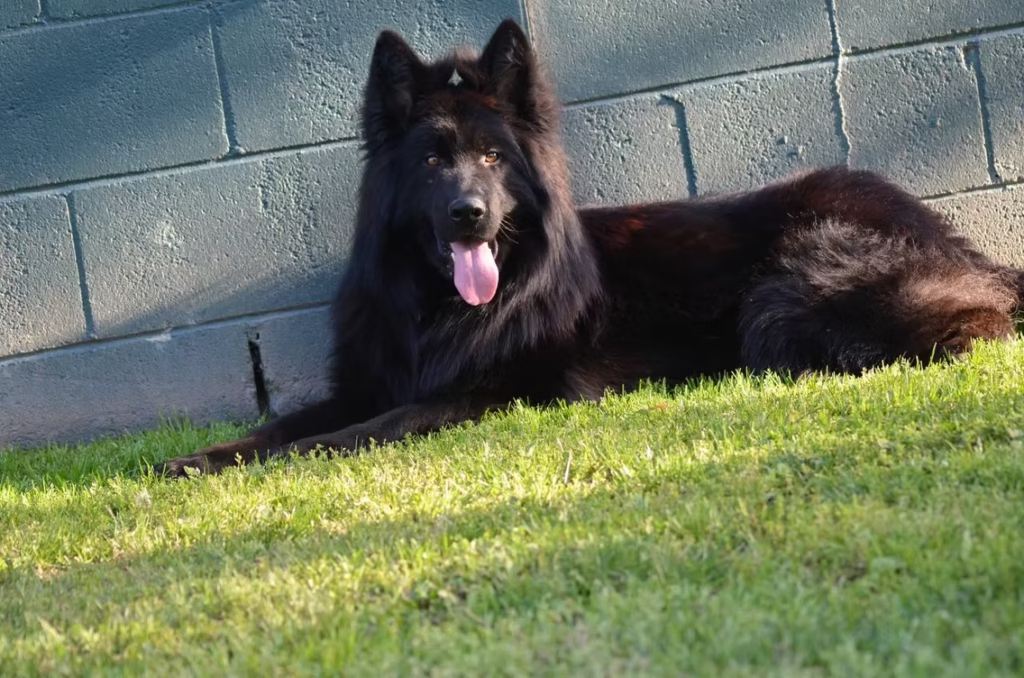
German Shepherd ears are one of the breed’s most recognizable features. The alert, upright ears of an adult German Shepherd are part of the breed’s classic appearance, but puppies are not born with erect ears. During the first several months of life, German Shepherd ears can change dramatically as the puppy grows.
One day, both ears may be completely floppy. A few days later, one ear may stand while the other remains down. Then both may stand for a short time before dropping again. For many new owners, these changes raise an important question: When do German Shepherd ears stand up, and what is considered normal?
Most German Shepherd puppies begin showing noticeable changes in their ears during the first few months of life. Many develop consistently upright ears between approximately three and six months of age, although every puppy develops differently.
Understanding the normal stages of German Shepherd puppy ears can help owners avoid unnecessary worry and recognize when veterinary advice may actually be needed.
Why Do German Shepherd Ears Stand Up?
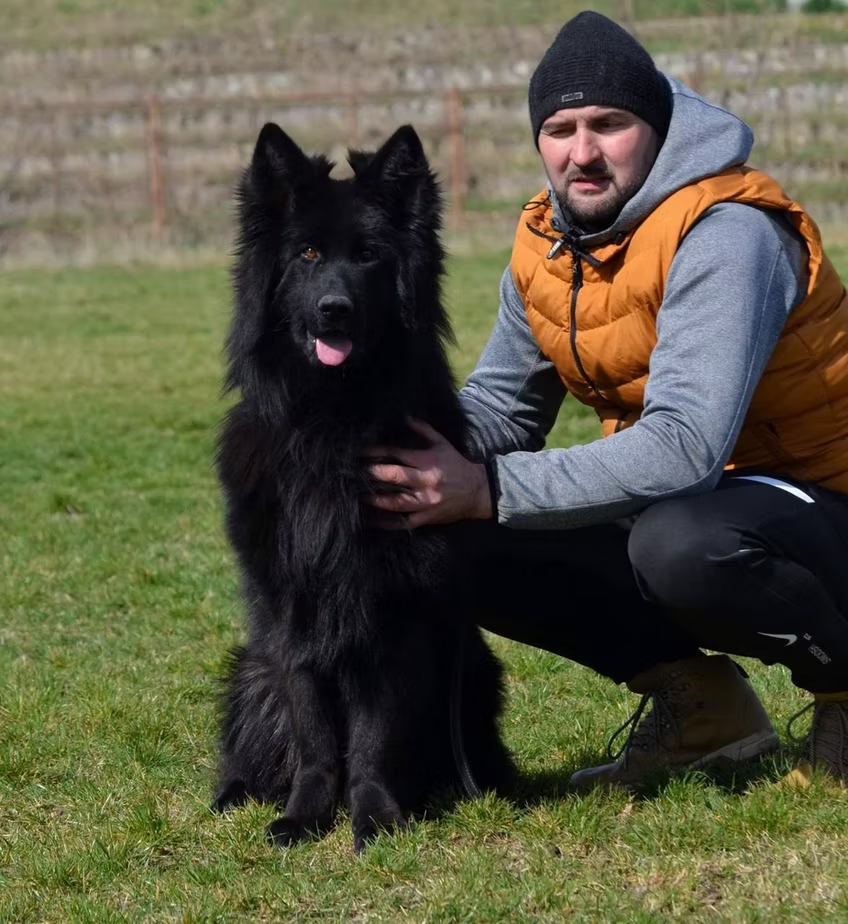
Adult German Shepherds are naturally known for their upright ears. According to the German Shepherd Dog Club of America breed standard, the ears should be moderately pointed, open toward the front, and carried erect when the dog is attentive.
However, puppies begin life with soft, floppy ears because the structures supporting the ears are still developing.
The visible external portion of a dog’s ear is known as the pinna. Its shape and strength depend on several factors, including cartilage, connective tissue, muscles, genetics, and the puppy’s overall growth.
As the puppy matures, the structures supporting the ears usually become stronger.
This development does not happen overnight.
A young German Shepherd may have:
- Two completely floppy ears
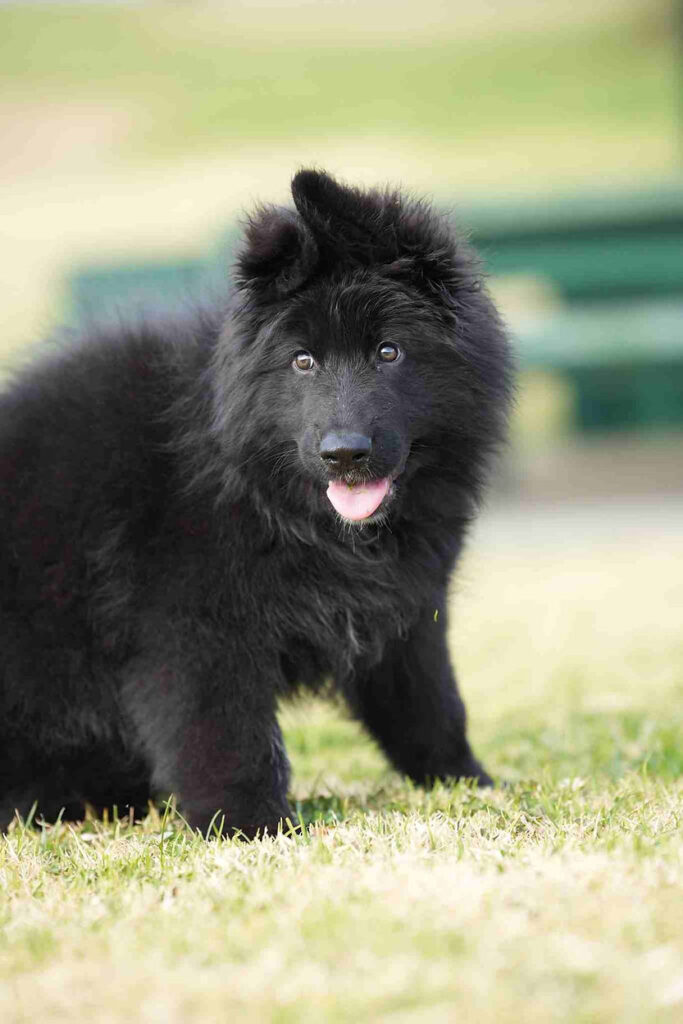
- One upright ear and one floppy ear
- Partially raised ears
- Ears leaning toward each other
- Ears standing only when the puppy is alert
- Ears that stand temporarily and then fall again
These changes can all occur during normal puppy development.
The 7 Stages of German Shepherd Ears Development
Stage 1: Birth to About 7 Weeks — Completely Floppy Ears
Nearly all German Shepherd ears begin soft and floppy.
During the earliest weeks of life, puppies are developing rapidly throughout their bodies. Their ears are still immature, and owners should not expect the adult upright appearance at this stage.
A six- or seven-week-old puppy with floppy ears is completely different from an adult German Shepherd.
At this age, healthy development is much more important than ear position. Puppies should be receiving appropriate nutrition, veterinary care, social interaction, and time with their mother and littermates.
The appearance of a puppy’s ears at six weeks does not necessarily predict exactly how they will look as an adult.
Stage 2: Around 8 to 10 Weeks — The First Signs of Ear Strength
Between approximately eight and ten weeks, some puppies begin showing the first noticeable changes in their ears.
You may notice that the base of the ear looks stronger while the tip still folds forward.
A puppy may suddenly lift one ear when hearing an interesting sound. Both ears may also rise temporarily when the puppy is excited or highly alert.
This is often the beginning of the unpredictable phase of German Shepherd ears development.
Owners should avoid comparing puppies too closely.
One puppy from a litter may already have two upright ears while another puppy from the same litter may still have completely floppy ears.
Both puppies may still be developing normally.
Stage 3: Around 10 to 12 Weeks — Up Today and Down Tomorrow
This is one of the most entertaining stages of raising a German Shepherd puppy.
You may wake up one morning and notice that both ears are standing perfectly upright.
The following day, one ear may fall.
A few days later, the opposite ear might be standing instead.
Some puppies even develop unusual temporary ear positions where the ears lean inward, outward, or appear almost sideways.
This does not automatically mean anything is wrong.
During this period, the structures supporting the German Shepherd puppy ears are still developing.
A common misconception is that once an ear stands for the first time, it should remain upright permanently.
That is not always the case.
Temporary changes can continue for weeks or even months.
Stage 4: Around 3 to 4 Months — More Consistent Upright Ears
Between three and four months, many owners begin seeing more consistent upright ear carriage.
This is also the age when many people begin searching for answers to the question, when do German Shepherd ears stand up?
The American Kennel Club notes that German Shepherd ears commonly stand around four months of age. However, this should be viewed as a general guideline rather than an exact deadline.
Some puppies develop earlier.
Others take longer.
Historical German Shepherd breed guidance also recognizes that some puppies may not permanently raise their ears until approximately four to six months of age or occasionally later.
Therefore, a German Shepherd puppy whose ears are still changing at four months is not automatically experiencing an abnormal development problem.
Stage 5: Around 4 to 5 Months — Teething and Ear Changes
The period between approximately four and five months is especially interesting because it often overlaps with teething.
Puppies begin losing their baby teeth and developing adult teeth during the first several months of life.
Owners frequently report noticeable changes in German Shepherd ears during teething.
For example, you may notice:
- One ear temporarily dropping
- Both ears becoming less consistent
- One ear standing while the other remains down
- Ears changing position frequently
- Ears standing in the morning but dropping later
This has created a common myth that the puppy’s body is somehow removing calcium from the ears and using it to build adult teeth.
That explanation is overly simplistic.
Teething and ear development occur during the same period of rapid puppy growth, but that does not mean owners should automatically supplement calcium.
Growing large-breed puppies require carefully balanced nutrition.
Adding unnecessary minerals can actually create health problems rather than solve them.
Stage 6: Around 5 to 6 Months — German Shepherd Ears Become More Stable
As a puppy approaches six months of age, German Shepherd ears often become noticeably more stable.
Instead of standing only when the puppy hears something interesting, the ears may remain upright throughout most of the day.
The ear bases often appear stronger, and there may be fewer dramatic changes from one day to the next.
For many puppies, this is when their adult ear appearance begins becoming more obvious.
Still, development varies.
A puppy whose ears are not perfectly upright at exactly five months should not automatically be considered abnormal.
Instead, consider the overall pattern.
Has either ear stood previously?
Are the ear bases becoming stronger?
Is the puppy healthy?
Is the puppy receiving appropriate large-breed puppy nutrition?
Is there any redness, pain, odor, swelling, or discharge?
Has the puppy experienced any injury to the ears?
These questions provide much more useful information than simply comparing the puppy to another dog of the same age.
Stage 7: After 6 Months — Evaluating Persistent Floppy Ears
By approximately six months, many German Shepherd puppies have developed relatively consistent upright ears.
However, some puppies may still require additional time.
If one or both ears remain completely floppy beyond this period, owners can discuss the situation with both their breeder and veterinarian.
Persistent floppy German Shepherd ears do not necessarily mean the dog has a serious health problem.
Several factors may influence final ear carriage, including:
- Genetics
- Ear size
- Ear shape
- Cartilage strength
- Individual development
- Previous injury
- Overall growth
The goal should be to determine whether the puppy is simply developing later or whether there is a structural or medical issue affecting the ears.
When Do German Shepherd Ears Stand Up?
For many puppies, noticeable ear development occurs between approximately eight weeks and six months of age.
A general developmental timeline looks like this:
| Puppy Age | Common Ear Appearance |
|---|---|
| Birth to 7 weeks | Usually completely floppy |
| 8 to 10 weeks | Ear bases may begin strengthening |
| 10 to 12 weeks | One or both ears may rise temporarily |
| 3 to 4 months | Many puppies show more consistent upright ears |
| 4 to 5 months | Ear position may fluctuate during rapid growth and teething |
| 5 to 6 months | Ear carriage often becomes increasingly stable |
| After 6 months | Persistent floppy ears can be discussed with a breeder and veterinarian |
This timeline should not be treated as an exact schedule.
Every puppy develops differently.
Some German Shepherd ears stand relatively early, while others take several additional months to mature.
Why Does One German Shepherd Ear Stand Up Before the Other?
One upright ear and one floppy ear is extremely common during puppyhood.
It is one of the classic stages of German Shepherd ears development.
One side may simply develop enough strength to remain upright before the other side.
The ears may even switch positions repeatedly.
For example:
Monday: left ear standing.
Wednesday: right ear standing.
Friday: both ears standing.
Sunday: one ear floppy again.
Although this can look unusual, it does not automatically indicate a problem.
Owners should pay more attention to whether the ears are healthy and whether the puppy is developing normally overall.
German Shepherd Ears During Teething
Teething occurs during approximately the same period when major ear changes are happening.
This overlap has caused many misconceptions among dog owners.
It is common for owners to observe changes in German Shepherd ears during teething, including temporary dropping or inconsistent ear positions.
However, owners should not automatically assume that a floppy ear means the puppy is deficient in calcium.
German Shepherds are large-breed dogs.
Growing large-breed puppies require carefully controlled levels of calcium, phosphorus, calories, and other nutrients.
A properly formulated large-breed puppy food is designed to provide those nutrients in appropriate amounts.
Adding supplements without veterinary guidance can interfere with that balance.
Why Are My German Shepherd Ears Not Standing Up?
If German Shepherd ears are not standing up, there are several possible explanations.
The Puppy May Simply Be Too Young
This is probably the most common reason.
Owners sometimes become worried when a puppy is only eight, ten, or twelve weeks old.
At that age, floppy or inconsistent ears are completely normal for many German Shepherd puppies.
The puppy may simply need more time.
Genetics Can Influence Ear Development
Genetics play an important role in many physical characteristics.
Ear size, shape, cartilage strength, and overall structure can all be influenced by genetics.
Looking at the puppy’s parents, grandparents, siblings, and previous related litters may provide additional context.
This is one reason responsible breeding and careful pedigree selection are important.
However, puppies from the same parents can still develop differently.
Larger Ears May Take Longer to Stand
Not every German Shepherd puppy has identical ear proportions.
Some puppies naturally have larger or heavier ears.
Those ears may require additional developmental time before the supporting structures are strong enough to keep them consistently upright.
Taking longer does not automatically mean something is wrong.
Ear Trauma Can Affect Ear Carriage
Significant trauma can potentially affect the structures supporting the ears.
Examples may include:
- Rough pulling
- Bites from another dog
- Significant injury
- Repeated aggressive bending
- Accidental trauma
Children should be taught not to pull, squeeze, fold, or repeatedly play roughly with a puppy’s ears.
Normal gentle touching is completely different from forceful manipulation.
Ear Problems Can Change How a Puppy Holds an Ear
Sometimes a puppy may suddenly carry an ear differently because the ear is uncomfortable.
Possible warning signs include:
- Redness
- Unusual odor
- Discharge
- Frequent scratching
- Persistent head shaking
- Swelling
- Sensitivity when touched
- Visible pain
If these symptoms are present, the issue may not be normal ear development.
A veterinarian should examine the ears to determine whether there is an infection, irritation, injury, or another medical problem.
What Can Owners Do to Support Healthy German Shepherd Ears?
There is no guaranteed trick or special food that will instantly make German Shepherd ears stand.
The best approach is to support the puppy’s overall healthy development.
Feed an Appropriate Large-Breed Puppy Diet
Nutrition is extremely important during puppyhood.
Growing German Shepherd puppies need complete and balanced food formulated for growth.
Because German Shepherds are a large breed, excessive calories or poorly balanced minerals can affect skeletal development.
Owners should choose an appropriate large-breed puppy diet and discuss significant nutritional changes with their veterinarian.
Provide Safe Chewing Options During Teething
Teething puppies naturally want to chew.
Providing safe, puppy-appropriate chew toys can help satisfy this behavior.
Chewing can also make the teething period easier for the puppy while protecting household items from becoming accidental chew toys.
Always supervise your puppy with chew products and choose items appropriate for the puppy’s age and size.
Avoid Rough Handling of the Ears
Owners sometimes become so concerned about German Shepherd ears that they constantly manipulate them.
Avoid repeatedly bending, folding, squeezing, or pulling the ears just to check whether they are becoming stronger.
Healthy puppy ears generally need time to develop.
Unless your veterinarian or an experienced professional gives you a specific reason to manipulate the ears, gentle normal handling is enough.
Maintain Routine Veterinary Care
Regular veterinary examinations are important during puppyhood.
Your veterinarian can monitor:
- Growth
- Weight
- Nutrition
- Teeth
- Skin
- Ears
- Vaccination needs
- General development
If an ear problem is developing, early examination can help identify the cause before owners begin experimenting with unnecessary home treatments.
Should You Give Calcium to Make German Shepherd Ears Stand Up?
Owners sometimes hear that calcium supplements will make floppy German Shepherd ears become upright.
This is not a good reason to give a growing puppy calcium supplements.
A puppy eating a properly formulated complete and balanced large-breed puppy food should already receive appropriate levels of calcium and phosphorus.
Adding extra calcium without veterinary guidance can disturb this balance.
Growing large-breed dogs are particularly sensitive to excessive calcium intake because their developing skeletal system is still forming.
More calcium does not automatically mean stronger ears.
If you believe your puppy has a nutritional deficiency, speak with your veterinarian and review the complete diet rather than adding supplements independently.
Should German Shepherd Ears Be Taped?
Ear taping is sometimes discussed among German Shepherd breeders and owners when ears remain down longer than expected.
However, owners should not experiment with ear taping without proper guidance.
Incorrect taping can potentially cause problems such as:
- Skin irritation
- Excessive pressure
- Trapped moisture
- Adhesive reactions
- Poor circulation
- Damage caused by incorrect removal
If your puppy’s ears remain floppy beyond the expected developmental period and you are considering physical support, speak with your breeder and veterinarian first.
An experienced professional can evaluate the individual puppy and determine whether intervention is appropriate.
Never use household glue or improvised materials on a puppy’s ears.
What Not to Do With Floppy German Shepherd Ears
When waiting for German Shepherd ears to develop, owners should avoid several common mistakes.
Do Not Panic at 8 to 12 Weeks
Floppy ears during early puppyhood are normal.
A puppy at this age still has months of growth ahead.
Do Not Constantly Compare Your Puppy With Other Puppies
Even littermates do not mature at exactly the same speed.
One puppy may have upright ears several weeks before another.
Do Not Give Calcium Without Veterinary Advice
Unnecessary mineral supplementation can negatively affect a growing large-breed puppy.
Do Not Aggressively Massage the Ears
Normal gentle handling is fine.
Repeated forceful manipulation is unnecessary.
Do Not Ignore Signs of Ear Disease
Floppy ears are one thing.
Pain, discharge, swelling, strong odor, or constant scratching are different.
These symptoms should be evaluated by a veterinarian.
Do Not Assume Temporary Dropping Means Permanent Floppy Ears
If an ear stood yesterday and dropped today, the puppy may simply still be developing.
Ear positions can change repeatedly during puppyhood.
When Should You Ask a Veterinarian About German Shepherd Ears?
Owners should contact a veterinarian sooner if the problem appears medical rather than developmental.
Schedule an examination if you notice:
- Pain
- Swelling
- Bleeding
- Discharge
- Strong odor
- Constant scratching
- Repeated head shaking
- Sudden ear drooping after an injury
- Significant skin irritation
- Obvious discomfort
If your puppy is otherwise healthy but German Shepherd ears remain completely floppy after approximately six months, you can also discuss the situation with your veterinarian and breeder.
This does not necessarily mean something serious is wrong.
The purpose of the evaluation is simply to understand the puppy’s individual development.
Do Floppy German Shepherd Ears Affect Hearing?
A floppy puppy ear does not automatically mean the puppy has a hearing problem.
Ear carriage and hearing ability are different issues.
Dogs use numerous muscles around their ears to change ear position and help identify the direction of sounds.
If your puppy does not respond normally to voices, noises, or environmental sounds, speak with your veterinarian about hearing.
Do not assume that the problem is simply related to whether the ears are standing.
Upright Ears Are Only One Part of a Healthy German Shepherd
It is easy for owners to become focused on physical appearance, especially because upright German Shepherd ears are one of the breed’s most recognizable characteristics.
However, ear position is only one small part of the complete dog.
A German Shepherd should be evaluated much more broadly.
Important factors include:
- Temperament
- Health
- Genetics
- Structure
- Movement
- Trainability
- Social behavior
- Development
- Pedigree
- Suitability for the household
Families searching for a puppy should never choose a German Shepherd based only on whether the puppy’s ears are already standing.
At Royal Tribes K9, families can explore our available German Shepherd puppies and review individual puppy information when comparing potential matches.
Families can also learn more about our Five-Year German Shepherd Health Guarantee and the health standards that support our breeding program.
Frequently Asked Questions About German Shepherd Ears
At What Age Do German Shepherd Ears Stand Up?
Many German Shepherd puppies begin showing noticeable upright ear development between approximately eight weeks and several months of age.
Around three to four months, many puppies show much stronger ear carriage.
Some puppies may continue developing until approximately five or six months or occasionally longer.
Is It Normal for German Shepherd Ears to Go Up and Down?
Yes.
It is common for German Shepherd puppy ears to stand temporarily and then drop again during development.
This can happen repeatedly during periods of rapid growth.
Why Is Only One German Shepherd Ear Standing?
One ear may simply mature faster than the other.
One upright ear and one floppy ear are common during puppyhood.
The slower ear may catch up as the puppy continues developing.
Can German Shepherd Ears Drop During Teething?
Owners often notice changes in ear carriage during the same months in which puppies are teething.
Temporary dropping can occur during this developmental period.
However, this does not automatically mean the puppy needs calcium supplements.
Will Calcium Make German Shepherd Ears Stand Up?
Owners should not give calcium supplements simply to make the ears stand.
Growing large-breed puppies need carefully balanced nutrition, and excessive calcium may cause problems.
Only use supplements when recommended by a veterinarian.
Can I Touch My German Shepherd Puppy’s Ears?
Yes.
Normal gentle touching is fine.
There is no need to avoid touching the ears completely.
However, rough pulling, repeated bending, squeezing, or aggressive manipulation should be avoided.
What If My German Shepherd’s Ears Never Stand Up?
If one or both ears remain floppy beyond the typical developmental period, speak with your breeder and veterinarian.
Genetics, ear size, cartilage structure, injury, and individual development may all influence final ear carriage.
Are Floppy German Shepherd Ears a Health Problem?
Not necessarily.
Floppy ears in young puppies are generally part of normal development.
However, sudden drooping accompanied by redness, pain, swelling, discharge, odor, or excessive scratching may indicate an ear problem and should be evaluated by a veterinarian.
Final Thoughts on German Shepherd Ears
Watching German Shepherd ears develop can be one of the most entertaining parts of raising a puppy.
One week, both ears may be floppy.
The next week, one may suddenly stand.
Then both may appear upright before one drops again.
In many cases, these changes are simply part of normal development.
Most owners do not need to chase quick fixes.
Instead, focus on appropriate large-breed puppy nutrition, routine veterinary care, safe chewing during teething, protection from injury, and allowing the puppy enough time to mature.
If the ears remain down beyond the typical developmental period, speak with your breeder and veterinarian for individual guidance.
More importantly, if you notice pain, swelling, discharge, odor, injury, excessive scratching, or another sign of an ear problem, have your puppy examined.
Every German Shepherd develops at an individual pace, and healthy overall development matters far more than reaching a particular ear position on a specific day.
The American Kennel Club’s German Shepherd grooming guide also discusses routine ear care and normal ear development.